

 Open in the Field Guide
We all need a Savior
“For all have sinned and fall short of the glory of God.”
Romans 3:23 (BSB)
None of us can earn our way to God by being good enough. We all need mercy.
 Field Guide · Plants and flowers
Conradina canescens
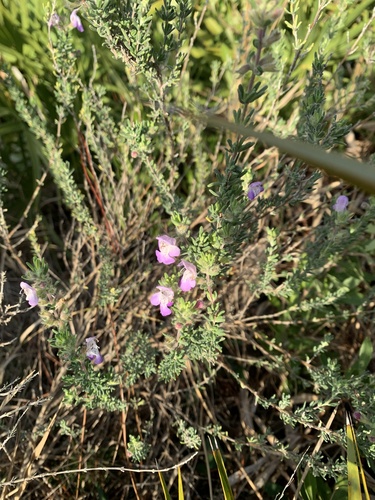
False rosemary is an aromatic, low-growing shrub in the mint family, native to coastal parts of Alabama, Florida, and Mississippi. It grows in sandy habitats such as sandhills, coastal scrub, and flatwoods.
 How to recognize it
Look for narrow, gray-green leaves with fine hairs and small, two-lipped pinkish-purple flowers. Its hairy foliage contrasts with the smoother leaves of Conradina glabra; several Conradina species can be difficult to distinguish without close inspection.
 In lavender fields
Its flowers can attract bees and other pollinators, much like lavender, but false rosemary is a native wild shrub rather than lavender.
 When to see it
False Rosemary is seen most often in Mar. There are 3202 public records of it worldwide.
 Questions
It’s seen most often in Mar.
Look for narrow, gray-green leaves with fine hairs and small, two-lipped pinkish-purple flowers. Its hairy foliage contrasts with the smoother leaves of Conradina glabra; several Conradina species can be difficult to distinguish without close inspection.















You may also like

Here to help while we’re tending the farm