

 Open in the Field Guide
We all need a Savior
“For all have sinned and fall short of the glory of God.”
Romans 3:23 (BSB)
None of us can earn our way to God by being good enough. We all need mercy.
 Field Guide · Plants and flowers
Ginkgo biloba

The fleshy outer layer of fallen seeds can irritate skin, and raw ginkgo seeds are poisonous to eat.
Ginkgo is a deciduous tree native to China and is the only living species in its ancient plant order. It is widely planted in parks and streets across North America and elsewhere.
 How to recognize it
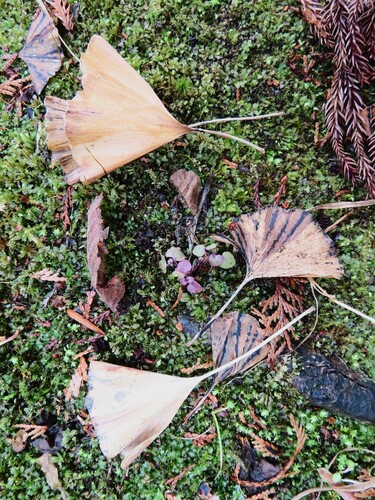
Its distinctive fan-shaped leaves often have a central notch and veins that fork repeatedly; the similar species listed are known from fossils, not living trees that it can be confused with in the field.
 When to see it
Gingko is seen most often in Jun, Jul, Aug, Sep, Oct. There are 64836 public records of it worldwide.
 Questions
It’s seen most often in Jun, Jul, Aug, Sep, Oct.
Its distinctive fan-shaped leaves often have a central notch and veins that fork repeatedly; the similar species listed are known from fossils, not living trees that it can be confused with in the field.
The fleshy outer layer of fallen seeds can irritate skin, and raw ginkgo seeds are poisonous to eat.

You may also like

Here to help while we’re tending the farm