

 Open in the Field Guide
We all need a Savior
“For all have sinned and fall short of the glory of God.”
Romans 3:23 (BSB)
None of us can earn our way to God by being good enough. We all need mercy.
 Field Guide · Plants and flowers
Ulex europaeus

Its stiff spines can scratch or puncture skin.
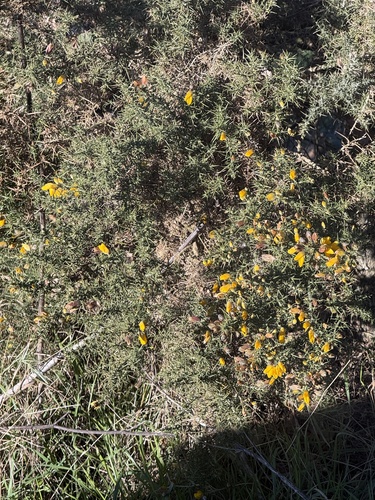
Gorse is a dense, evergreen, spiny shrub native to western Europe. It grows in heathland, coastal areas, and other open places, and can become invasive where it has been introduced.
 How to recognize it
It has stout branching spines and conspicuous yellow, pea-shaped flowers; it is generally more robust, with larger flowers, than the other Ulex species listed.
 In lavender fields
Bees may visit gorse flowers, but gorse is a separate wild shrub rather than a lavender companion plant.
 When to see it
Gorse is seen most often in Jan, Apr, May, Jun, Jul, Aug, Sep. There are 437600 public records of it worldwide.
 Questions
It’s seen most often in Jan, Apr, May, Jun, Jul, Aug, Sep.
It has stout branching spines and conspicuous yellow, pea-shaped flowers; it is generally more robust, with larger flowers, than the other Ulex species listed.
Its stiff spines can scratch or puncture skin.















You may also like

Here to help while we’re tending the farm