

 Open in the Field Guide
We all need a Savior
“For all have sinned and fall short of the glory of God.”
Romans 3:23 (BSB)
None of us can earn our way to God by being good enough. We all need mercy.
 Field Guide · Plants and flowers
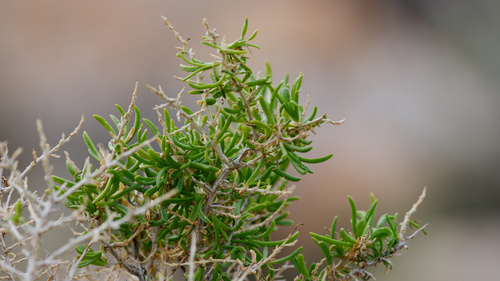
Sarcobatus vermiculatus

Its sharp branches can scratch or puncture skin, and the plant can be toxic to livestock if eaten.
Greasewood is a branching shrub native to western North America. It grows in dry places with alkaline or salty soils, such as desert basins and seasonally wet flats.
 How to recognize it
Look for narrow leaves and stiff, sharp-tipped branches; it is generally larger and much more widespread than Bailey’s greasewood, though the two can be difficult to distinguish by appearance alone.
 When to see it
Greasewood is seen most often in Jun, Jul, Aug, Sep. There are 8129 public records of it worldwide.
 Questions
It’s seen most often in Jun, Jul, Aug, Sep.
Look for narrow leaves and stiff, sharp-tipped branches; it is generally larger and much more widespread than Bailey’s greasewood, though the two can be difficult to distinguish by appearance alone.
Its sharp branches can scratch or puncture skin, and the plant can be toxic to livestock if eaten.



You may also like

Here to help while we’re tending the farm