

 Open in the Field Guide
We all need a Savior
“For all have sinned and fall short of the glory of God.”
Romans 3:23 (BSB)
None of us can earn our way to God by being good enough. We all need mercy.
 Field Guide · Plants and flowers
Rubus armeniacus

Its hooked prickles can scratch or puncture skin, so avoid pushing through the canes.
Himalayan blackberry is a large, thorny blackberry native to Armenia and northwestern Iran. It has become invasive in parts of North America, where it often grows in disturbed areas, along roadsides, and in dense thickets.
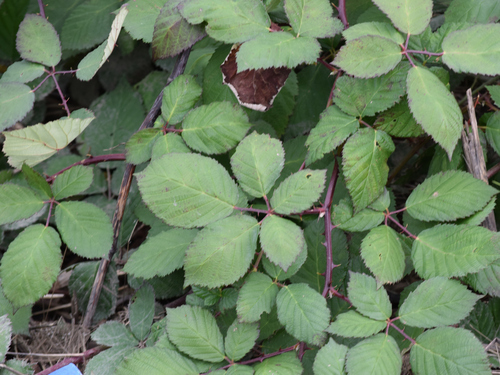
 How to recognize it
Look for long, arching canes with hooked prickles and clusters of black berries; it is much more robust than red raspberry, whose ripe fruit pulls away hollow. It is also larger and more heavily armed than the low-growing stone bramble and trailing dewberry; blackberry species can be difficult to distinguish from one another.
 In lavender fields
Bees may visit its flowers for pollen and nectar, but its invasive thickets can crowd out garden plants, including lavender.
 When to see it
Himalayan Blackberry is seen most often in Jun, Jul, Aug, Sep. There are 97703 public records of it worldwide.
 Questions
It’s seen most often in Jun, Jul, Aug, Sep.
Look for long, arching canes with hooked prickles and clusters of black berries; it is much more robust than red raspberry, whose ripe fruit pulls away hollow. It is also larger and more heavily armed than the low-growing stone bramble and trailing dewberry; blackberry species can be difficult to distinguish from one another.
Its hooked prickles can scratch or puncture skin, so avoid pushing through the canes.















You may also like

Here to help while we’re tending the farm