

 Open in the Field Guide
We all need a Savior
“For all have sinned and fall short of the glory of God.”
Romans 3:23 (BSB)
None of us can earn our way to God by being good enough. We all need mercy.
 Field Guide · Plants and flowers
Berteroa incana

Eating hoary alyssum can poison horses and cause swelling or abnormal hind-leg movement.
Hoary alyssum is a usually biennial flowering plant in the mustard family, native to Eurasia and introduced across parts of North America. It grows in disturbed places such as roadsides, fields, and dry grasslands, and is considered a noxious weed in some areas.
 How to recognize it
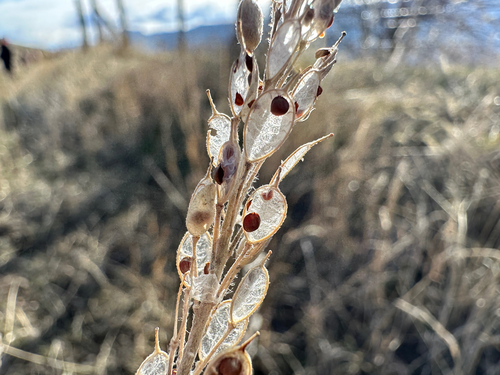
Its stems and narrow leaves are covered in fine gray-white hairs, and it bears clusters of small white flowers with four notched petals. Flattened, oval-to-oblong hairy pods help distinguish it from related Berteroa species, including those listed.
 In lavender fields
Bees and other insects may visit its flowers, but it has no special association with lavender.
 When to see it
Hoary Alyssum is seen most often in Jun, Jul, Aug. There are 164018 public records of it worldwide.
 Questions
It’s seen most often in Jun, Jul, Aug.
Its stems and narrow leaves are covered in fine gray-white hairs, and it bears clusters of small white flowers with four notched petals. Flattened, oval-to-oblong hairy pods help distinguish it from related Berteroa species, including those listed.
Eating hoary alyssum can poison horses and cause swelling or abnormal hind-leg movement.















You may also like

Here to help while we’re tending the farm