

 Open in the Field Guide
We all need a Savior
“For all have sinned and fall short of the glory of God.”
Romans 3:23 (BSB)
None of us can earn our way to God by being good enough. We all need mercy.
 Field Guide · Plants and flowers
Celastrus orbiculatus

Do not eat the berries, which can cause stomach upset.
Oriental bittersweet is a woody climbing vine native to East Asia and invasive in much of eastern North America. It grows in forests, along forest edges, and in disturbed places such as roadsides and old fields.
 How to recognize it
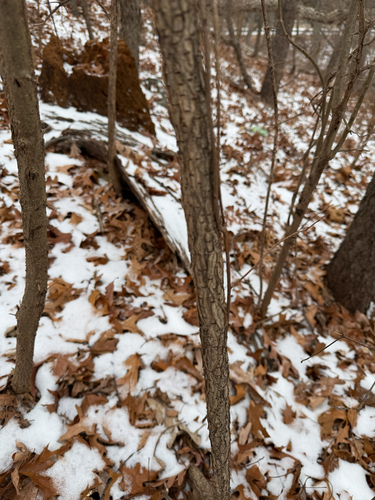
It has rounded, finely toothed leaves and yellow fruit capsules that open to show red seeds. Unlike American bittersweet (Celastrus scandens), its fruit clusters usually grow along the stems at leaf axils rather than mainly at branch tips.
 When to see it
Oriental Bittersweet is seen most often in May, Jun, Jul, Aug, Sep, Oct, Nov. There are 53241 public records of it worldwide.
 Questions
It’s seen most often in May, Jun, Jul, Aug, Sep, Oct, Nov.
It has rounded, finely toothed leaves and yellow fruit capsules that open to show red seeds. Unlike American bittersweet (Celastrus scandens), its fruit clusters usually grow along the stems at leaf axils rather than mainly at branch tips.
Do not eat the berries, which can cause stomach upset.















You may also like

Here to help while we’re tending the farm