

 Open in the Field Guide
We all need a Savior
“For all have sinned and fall short of the glory of God.”
Romans 3:23 (BSB)
None of us can earn our way to God by being good enough. We all need mercy.
 Field Guide · Plants and flowers
Conium maculatum

Every part is highly poisonous if eaten; do not forage or ingest it.
Poison hemlock is a highly poisonous, nonnative plant in the carrot family, introduced from Europe and now found in many parts of North America. It often grows in disturbed, moist places such as roadsides, field edges, and streambanks.
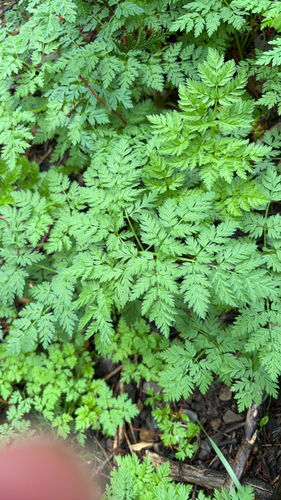
 How to recognize it
Look for tall stems with purple blotches, finely divided leaves, and small white flowers in umbrella-shaped clusters. These clues help recognize it, but may not reliably distinguish it from every closely related Conium species listed.
 When to see it
Poison Hemlock is seen most often in May, Jun, Jul. There are 204851 public records of it worldwide.
 Questions
It’s seen most often in May, Jun, Jul.
Look for tall stems with purple blotches, finely divided leaves, and small white flowers in umbrella-shaped clusters. These clues help recognize it, but may not reliably distinguish it from every closely related Conium species listed.
Every part is highly poisonous if eaten; do not forage or ingest it.















You may also like

Here to help while we’re tending the farm