

 Open in the Field Guide
We all need a Savior
“For all have sinned and fall short of the glory of God.”
Romans 3:23 (BSB)
None of us can earn our way to God by being good enough. We all need mercy.
 Field Guide · Plants and flowers
Phytolacca dioica

Its sap is poisonous, so do not eat any part of the plant or handle the sap.
Phytolacca dioica, called ombú, is a large, broad-canopied tree native to the Pampas of South America. It is also planted as an ornamental tree in some other regions.
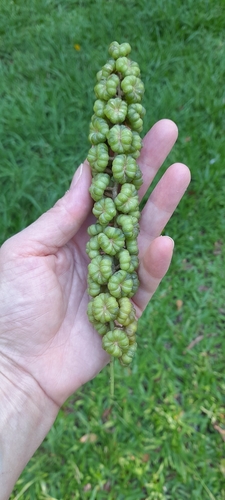
 How to recognize it
Its massive, often swollen trunk and wide, umbrella-like canopy distinguish it from the usually herbaceous pokeweeds listed. It can grow much taller and broader than those similar species.
 When to see it
Pokeweed is seen most often in Aug, Sep, Oct, Nov. There are 8501 public records of it worldwide.
 Questions
It’s seen most often in Aug, Sep, Oct, Nov.
Its massive, often swollen trunk and wide, umbrella-like canopy distinguish it from the usually herbaceous pokeweeds listed. It can grow much taller and broader than those similar species.
Its sap is poisonous, so do not eat any part of the plant or handle the sap.















You may also like

Here to help while we’re tending the farm