

 Open in the Field Guide
We all need a Savior
“For all have sinned and fall short of the glory of God.”
Romans 3:23 (BSB)
None of us can earn our way to God by being good enough. We all need mercy.
 Field Guide · Plants and flowers
Asimina parviflora

Do not eat the seeds, which contain compounds that can be toxic.
Smallflower pawpaw is a deciduous shrub in the custard apple family, native to the southeastern United States. It grows in habitats such as sandy woods, pine forests, and scrub.
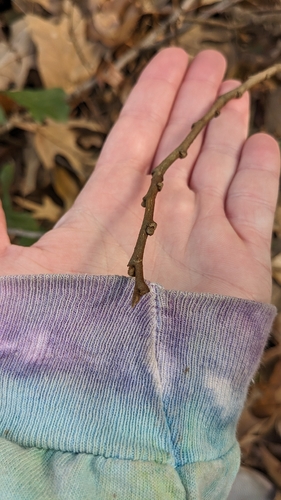
 How to recognize it
It has relatively small flowers and narrower leaves than the larger-leaved common pawpaw, Asimina triloba. Its leaves are less broadly shaped than those of A. obovata and are not as conspicuously net-veined as those of A. reticulata; A. longifolia typically has especially long, narrow leaves.
 When to see it
Smallflower Pawpaw is seen most often in Apr, May, Jun. There are 6547 public records of it worldwide.
 Questions
It’s seen most often in Apr, May, Jun.
It has relatively small flowers and narrower leaves than the larger-leaved common pawpaw, Asimina triloba. Its leaves are less broadly shaped than those of A. obovata and are not as conspicuously net-veined as those of A. reticulata; A. longifolia typically has especially long, narrow leaves.
Do not eat the seeds, which contain compounds that can be toxic.















You may also like

Here to help while we’re tending the farm