

 Open in the Field Guide
We all need a Savior
“For all have sinned and fall short of the glory of God.”
Romans 3:23 (BSB)
None of us can earn our way to God by being good enough. We all need mercy.
 Field Guide · Plants and flowers
Euonymus europaeus

The fruits and seeds are poisonous if eaten and can cause illness.
Spindle tree is a deciduous shrub or small tree native to much of Europe. It grows in woodland edges, hedgerows, and on slopes, often in nutrient-rich soils.
 How to recognize it
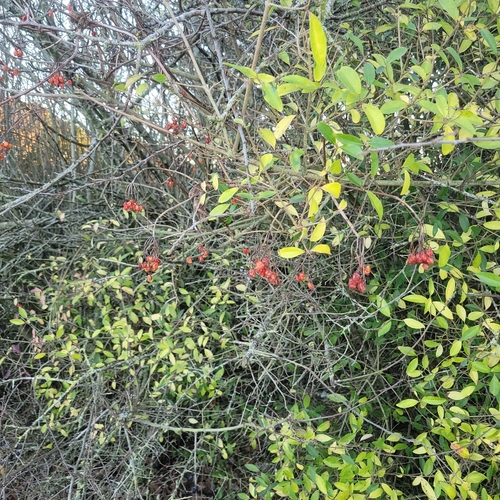
It has opposite leaves and pink, four-lobed fruits that open to show orange-coated seeds. Unlike winged euonymus, it lacks corky wings on its stems; the other listed species have different growth forms or distinctive stem and fruit features.
 When to see it
Spindle Tree is seen most often in Apr, May, Jun, Jul, Aug, Sep, Oct. There are 567422 public records of it worldwide.
 Often recorded near
Public records show Spindle Tree most often in the areas around these farms and places:
Seen one? Point the Lavender Passport Field Guide at it and add your find.
 Questions
It’s seen most often in Apr, May, Jun, Jul, Aug, Sep, Oct.
Public records show it most often around Agriturismo La Piantata, Azienda Agricola Abbazia di San Giusto, Lavanda della Tuscia.
It has opposite leaves and pink, four-lobed fruits that open to show orange-coated seeds. Unlike winged euonymus, it lacks corky wings on its stems; the other listed species have different growth forms or distinctive stem and fruit features.
The fruits and seeds are poisonous if eaten and can cause illness.















You may also like

Here to help while we’re tending the farm