

 Open in the Field Guide
We all need a Savior
“For all have sinned and fall short of the glory of God.”
Romans 3:23 (BSB)
None of us can earn our way to God by being good enough. We all need mercy.
 Field Guide · Plants and flowers
Quercus bicolor

Raw acorns contain tannins and can cause illness if eaten in quantity; keep them away from children and pets.
Swamp white oak is a deciduous North American tree in the beech family. It grows in eastern and central North America, often in moist woods and along streams or wetlands, though it can also grow in drier sites.
 How to recognize it
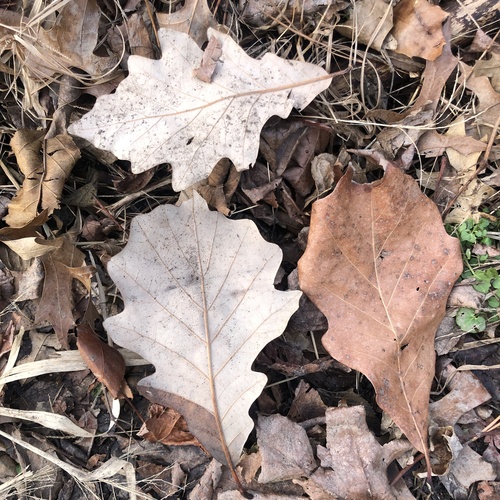
Its leaves have rounded lobes and pale, often fuzzy undersides, giving them a two-toned look. Unlike the listed oaks, it is not evergreen like Quercus rotundifolia, does not have corky bark like Q. suber, and has acorns on stalks rather than the stalkless acorns of Q. petraea; Q. robur has more deeply lobed leaves.
 When to see it
Swamp White Oak is seen most often in Jun, Jul, Aug, Sep, Oct. There are 17118 public records of it worldwide.
 Questions
It’s seen most often in Jun, Jul, Aug, Sep, Oct.
Its leaves have rounded lobes and pale, often fuzzy undersides, giving them a two-toned look. Unlike the listed oaks, it is not evergreen like Quercus rotundifolia, does not have corky bark like Q. suber, and has acorns on stalks rather than the stalkless acorns of Q. petraea; Q. robur has more deeply lobed leaves.
Raw acorns contain tannins and can cause illness if eaten in quantity; keep them away from children and pets.















You may also like

Here to help while we’re tending the farm