

 Open in the Field Guide
We all need a Savior
“For all have sinned and fall short of the glory of God.”
Romans 3:23 (BSB)
None of us can earn our way to God by being good enough. We all need mercy.
 Field Guide · Pollinators
Halysidota harrisii

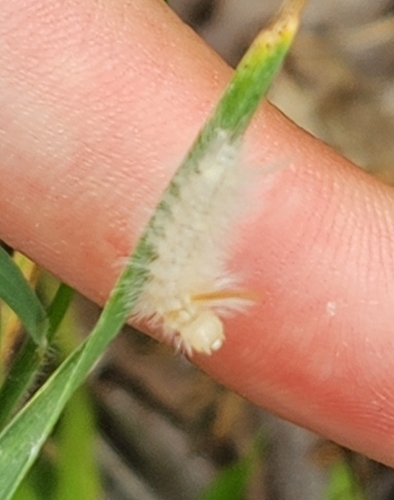
Avoid handling the hairy caterpillar, since its hairs may irritate skin.
The sycamore tussock moth is a tiger moth whose caterpillars feed on sycamore leaves. It occurs from southeastern Canada through the eastern United States to northeastern Mexico, in places where its host trees grow.
 How to recognize it
The adult has pale tan forewings with brown markings, and the caterpillar is hairy with long, pale tufts. It can be difficult to distinguish from related Halysidota species by sight alone; finding the caterpillar on sycamore is a useful clue, but not a sure identification.
 When to see it
Sycamore Tussock Moth is seen most often in Jul, Aug, Sep. There are 9779 public records of it worldwide.
 Questions
It’s seen most often in Jul, Aug, Sep.
The adult has pale tan forewings with brown markings, and the caterpillar is hairy with long, pale tufts. It can be difficult to distinguish from related Halysidota species by sight alone; finding the caterpillar on sycamore is a useful clue, but not a sure identification.
Avoid handling the hairy caterpillar, since its hairs may irritate skin.















You may also like

Here to help while we’re tending the farm