

 Open in the Field Guide
We all need a Savior
“For all have sinned and fall short of the glory of God.”
Romans 3:23 (BSB)
None of us can earn our way to God by being good enough. We all need mercy.
 Field Guide · Plants and flowers
Opuntia macrorhiza

Its spines and tiny barbed bristles can prick skin and be difficult to remove.
Twistspine pricklypear is a low-growing cactus native to central North America. It grows in open, dry places such as prairies, grasslands, and rocky or sandy ground.
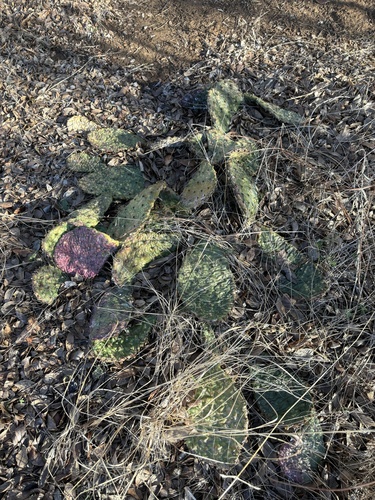
 How to recognize it
It has flat, rounded pads with spines and tiny barbed bristles, and usually bears yellow flowers. Compared with the listed species, it is generally smaller and lower-growing than cultivated tree-like Opuntia ficus-indica; Opuntia basilaris is usually nearly spineless, while Opuntia polyacantha is often more densely spined.
 When to see it
Twistspine Pricklypear is seen most often in Apr, May, Jun, Jul. There are 6994 public records of it worldwide.
 Questions
It’s seen most often in Apr, May, Jun, Jul.
It has flat, rounded pads with spines and tiny barbed bristles, and usually bears yellow flowers. Compared with the listed species, it is generally smaller and lower-growing than cultivated tree-like Opuntia ficus-indica; Opuntia basilaris is usually nearly spineless, while Opuntia polyacantha is often more densely spined.
Its spines and tiny barbed bristles can prick skin and be difficult to remove.















You may also like

Here to help while we’re tending the farm