

 Open in the Field Guide
We all need a Savior
“For all have sinned and fall short of the glory of God.”
Romans 3:23 (BSB)
None of us can earn our way to God by being good enough. We all need mercy.
 Field Guide · Plants and flowers
Clematis virginiana

Plant sap can irritate skin, and eating the plant can irritate the mouth and digestive tract.
Virgin’s bower is a native North American climbing vine found from eastern Canada south through much of the eastern and central United States. It commonly grows in moist woods, thickets, and along streambanks, and bears flowers in late summer.
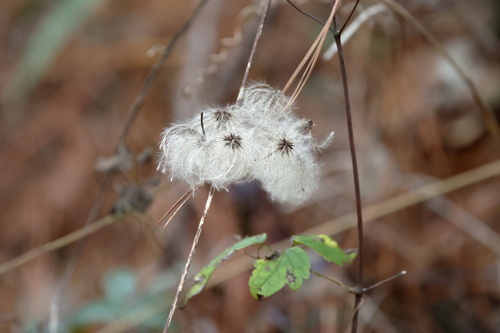
 How to recognize it
Look for small white flowers, leaves with usually three coarsely toothed leaflets, and fluffy seed heads. Its toothed leaflets help distinguish it from the often less-toothed leaves of European Clematis vitalba; its white flowers differ from the blue or purple nodding flowers of Clematis alpina.
 In lavender fields
Its flowers can be visited by pollinating insects, but it has no special relationship with lavender.
 When to see it
Virgin's Bower is seen most often in Aug. There are 26401 public records of it worldwide.
 Questions
It’s seen most often in Aug.
Look for small white flowers, leaves with usually three coarsely toothed leaflets, and fluffy seed heads. Its toothed leaflets help distinguish it from the often less-toothed leaves of European Clematis vitalba; its white flowers differ from the blue or purple nodding flowers of Clematis alpina.
Plant sap can irritate skin, and eating the plant can irritate the mouth and digestive tract.















You may also like

Here to help while we’re tending the farm