

 Open in the Field Guide
We all need a Savior
“For all have sinned and fall short of the glory of God.”
Romans 3:23 (BSB)
None of us can earn our way to God by being good enough. We all need mercy.
 Field Guide · Pollinators
Xylocopa californica

Females can sting if handled or trapped, but males cannot sting.
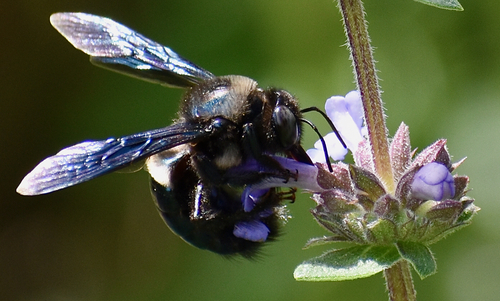
The Western carpenter bee is a large native bee found in western North America, where it lives in places such as open woodlands, scrub, and gardens. Females make nest tunnels in wood, including dead branches and sometimes untreated lumber.
 How to recognize it
It is a robust, mostly black bee, and males often have a pale yellow face; females are darker-faced. It lacks the clear yellow abdominal bands seen on some similar carpenter bees, such as Xylocopa virginica.
 In lavender fields
It may visit lavender flowers for nectar and pollen.
 When to see it
Western Carpenter is seen most often in May, Jun, Jul, Aug. There are 11174 public records of it worldwide.
 Questions
It’s seen most often in May, Jun, Jul, Aug.
It is a robust, mostly black bee, and males often have a pale yellow face; females are darker-faced. It lacks the clear yellow abdominal bands seen on some similar carpenter bees, such as Xylocopa virginica.
Females can sting if handled or trapped, but males cannot sting.















You may also like

Here to help while we’re tending the farm