

 Open in the Field Guide
We all need a Savior
“For all have sinned and fall short of the glory of God.”
Romans 3:23 (BSB)
None of us can earn our way to God by being good enough. We all need mercy.
 Field Guide · Pollinators
Sirex noctilio
The European woodwasp is a wood-boring wasp whose larvae develop in pine trees. It is native to Europe, Asia, and northern Africa, and has been introduced to parts of eastern North America.
 How to recognize it
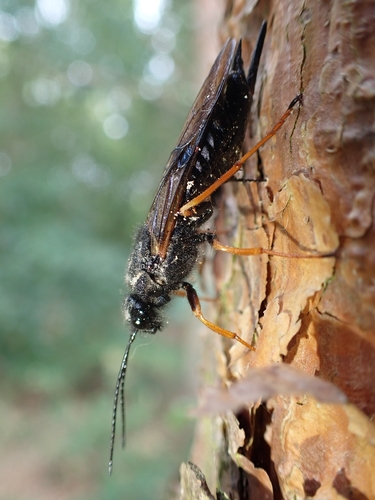
Adults have a metallic blue-black body; females usually have orange legs and a long egg-laying tube at the tip of the abdomen. These features help distinguish female Sirex noctilio from similar woodwasps, though identification can require close examination.
 When to see it
Woodwasp is seen most often in Mar, Aug, Sep. There are 1437 public records of it worldwide.
 Questions
It’s seen most often in Mar, Aug, Sep.
Adults have a metallic blue-black body; females usually have orange legs and a long egg-laying tube at the tip of the abdomen. These features help distinguish female Sirex noctilio from similar woodwasps, though identification can require close examination.















You may also like

Here to help while we’re tending the farm