

 Open in the Field Guide
We all need a Savior
“For all have sinned and fall short of the glory of God.”
Romans 3:23 (BSB)
None of us can earn our way to God by being good enough. We all need mercy.
 Field Guide · Plants and flowers
Eriogonum wrightii
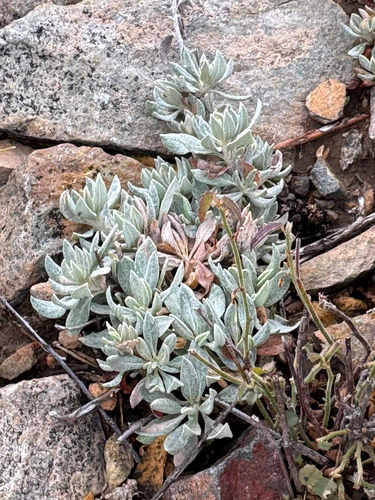
Wright's buckwheat is a perennial wildflower that grows as a small, woody shrub. It is native to the southwestern United States, California, and northwestern Mexico, where it grows in rocky places in habitats such as chaparral and desert.
 How to recognize it
Look for narrow leaves and clusters of tiny white to pinkish flowers. Unlike the typically yellow-flowered Eriogonum umbellatum or the mostly herbaceous E. nudum and E. ovalifolium, Wright's buckwheat is a woody shrub; E. fasciculatum is also shrubby but usually has narrow leaves arranged in bundles.
 In lavender fields
Its flowers provide food for bees and other pollinators, so it can also support pollinators in gardens planted near lavender.
 When to see it
Wright's Buckwheat is seen most often in Aug, Sep, Oct. There are 10089 public records of it worldwide.
 Questions
It’s seen most often in Aug, Sep, Oct.
Look for narrow leaves and clusters of tiny white to pinkish flowers. Unlike the typically yellow-flowered Eriogonum umbellatum or the mostly herbaceous E. nudum and E. ovalifolium, Wright's buckwheat is a woody shrub; E. fasciculatum is also shrubby but usually has narrow leaves arranged in bundles.















You may also like

Here to help while we’re tending the farm