

Use & Care NotesCompanion Plants
Abiqua Drinking Gourd Hosta: Blue-Green Cups for the Shady Side
 Save
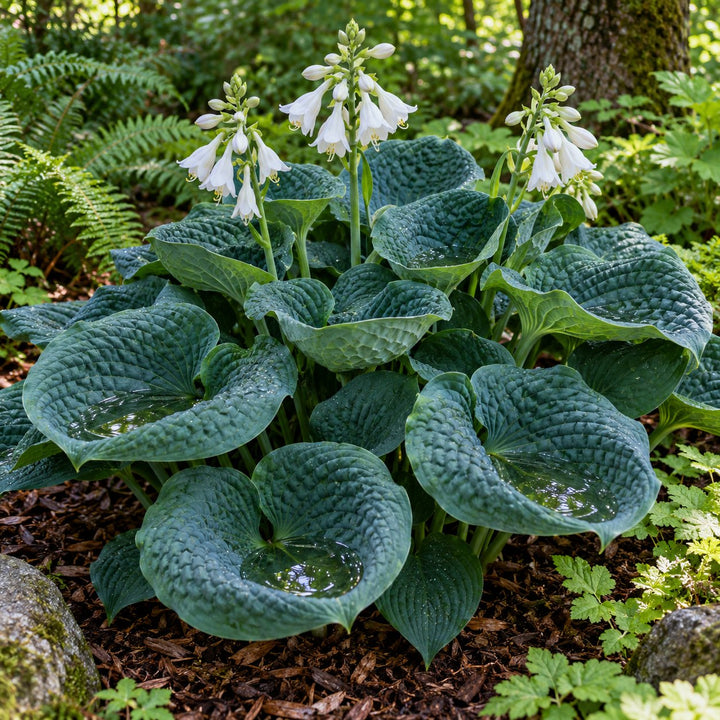
Abiqua Drinking Gourd hosta earns its name honestly. Its thick, round, dark blue-green leaves curl upward into bowls so deep they can hold up to 3 inches of rainwater, which makes it the only plant we know of that doubles as a birdbath. The heavy, seersuckered leaves also give it good resistance to slugs, a real advantage in damp shade.
It is not a plant for the lavender bed. Hostas want shade and steady moisture, lavender wants sun and dry feet, so Abiqua belongs on the shady side of the same garden plan.
Abiqua Drinking Gourd at a glance
| Trait | What to expect |
|---|---|
| Botanical name | Hosta 'Abiqua Drinking Gourd' |
| Foliage | Dark blue-green, heavily puckered, deeply cupped |
| Flowers | White bells on stems about 22 inches tall |
| Size | 18 to 24 inches tall, 36 to 45 inches wide |
| Bloom | Starts mid-June, peaks late June, single flush |
| Hardiness | USDA zones 3 to 9 |
| Light | Part to full shade |
| Wildlife | Good for pollinators; deer find it tasty |
Where it fits in a lavender garden
Most properties that have a sunny lavender patch also have a north wall, a big maple or a damp corner where lavender would sulk. That is where Abiqua shines. Its cool blue-green cups bring a calm, silvery tone to shade that echoes the gray-blue of lavender foliage across the yard, so the two parts of the garden feel related even though they never share soil.
It has earned an RHS Award of Garden Merit and hosta society honors, and it makes a strong specimen. Pair it with ferns, astilbe or coral bells for contrast in leaf shape. Sketch both the sunny and shady beds in the Companion Plant Planner.
Planting and care
- Site: part to full shade, with protection from hot afternoon sun. Leaves can scorch in hot, dry spots.
- Soil: evenly moist, rich in organic matter and well drained. It should not sit waterlogged in winter.
- Water: steady moisture through the first season and during dry spells after that.
- Mulch: keep it thin near the crown, since damp mulch gives slugs a hiding place.
- Fall: cut collapsed foliage down after hard frost to reduce slug eggs and disease.
Watch for deer, anthracnose and petiole rot, and remove any plant with mottled or distorted leaves, which can signal Hosta virus X.
Flowers and those famous cups
The white bell flowers barely clear the leaves in early summer. Many gardeners cut the flower stems after bloom so the eye stays on the foliage. The cups are at their best after a rain, when each leaf holds a small pool. If water sitting in the leaves bothers you, a gentle tip of the leaf empties it, though birds seem to appreciate the service.
Plug tray formats
Abiqua Drinking Gourd is offered as a 72-cell plug tray and a 20-cell plug tray, both made for growers and gardeners who pot up or plant in quantity. See each product page for current availability, or the Wholesale Hub for tray orders.
Frequently asked questions
Do the cupped leaves cause rot?
Not in normal garden conditions. The leaves shed water as they move in the wind, and the thick substance of the leaf handles wet weather well.
How long before it reaches full width?
Hostas grow from plugs into mature clumps over several seasons. Space for the full 3 to nearly 4 feet so you are not dividing it early.
Can it share a bed with lavender?
No. The shade and moisture it needs would rot lavender. Give each its own spot on the property.
















Share how it went in your field