

Product Field NotesCompanion Plants
Above the Clouds Hosta: A Wide Blue Anchor for Shade Beds
 Save
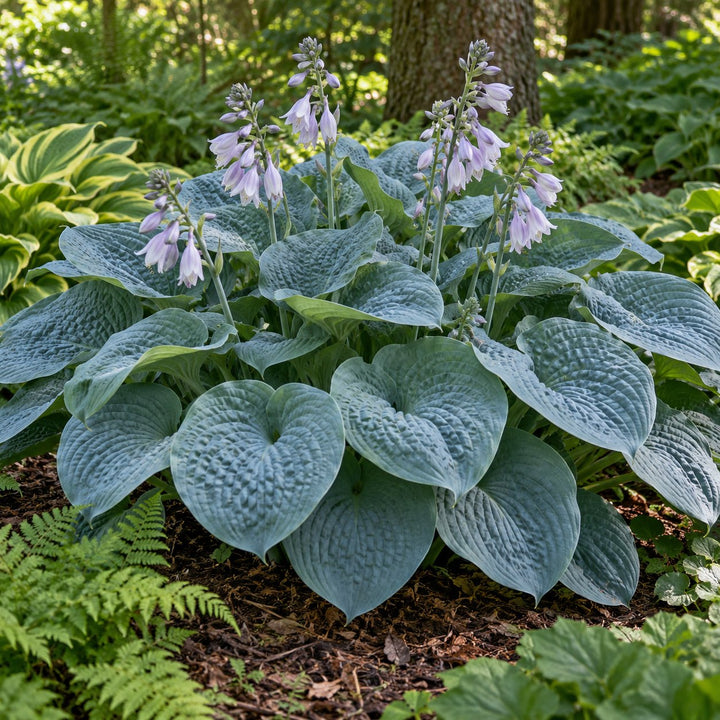
Above the Clouds hosta is a big, powdery blue hosta with rounded, cupped leaves and a puckered, seersucker surface. Smooth, flat margins give each leaf a clean outline, and the clump spreads wide enough to fill a shady bed on its own. In midsummer, pale lavender bells rise well above the foliage, which is about as close to lavender as a shade garden can get.
Above the Clouds at a glance
| Trait | What to expect |
|---|---|
| Botanical name | Hosta 'Above the Clouds' |
| Foliage | Cloudy blue, rounded, cupped and puckered |
| Flowers | Pale lavender bells on stems 30 to 38 inches tall |
| Size | About 25 inches tall, 54 to 60 inches wide |
| Bloom | Starts early July, peaks mid-July |
| Hardiness | USDA zones 3 to 9 |
| Light | Part sun to part shade, full shade |
| Deer | Susceptible |
A lavender echo in the shade
Lavender needs sun and lean, dry soil, and this hosta needs nearly the opposite, so they will never share a bed. What they can share is a color story. The waxy blue coating on these leaves picks up the cool gray-blue of lavender foliage, and the pale lavender flower spires bloom in July, right around the time the sunny lavender beds are in color. Plant Above the Clouds under trees or along a north-facing wall, and your shady corner and sunny field will feel like parts of one plan.
It works for mass planting, as a bold anchor in a mixed shade bed and in large containers. Ferns and woodland perennials make good neighbors. Map the whole yard in the Companion Plant Planner.
Keeping the blue blue
The blue on a hosta like this comes from a waxy coating over a green leaf. It holds late into the season here, but strong sun and heat wear it down faster, which is why shade gives the best color. Water at the base rather than overhead when you can, and avoid handling the leaves more than needed.
Care through the year
- Spring: divide crowded clumps as the new shoots appear.
- Summer: keep the soil evenly moist, especially in hot, dry spells when leaves can scorch. Cut the flower stems after bloom if you prefer a tidy look.
- Slugs: damp shade favors them, so keep mulch thin near the crown.
- Fall: remove collapsed foliage after hard frost to cut down on slug eggs and disease.
- Winter: fully hardy in Michigan and needs winter cold to rest. Avoid spots that stay waterlogged.
Watch for deer, anthracnose and petiole rot, and destroy any plant showing mottled or distorted leaves.
Tray options
Above the Clouds comes as a 72-cell plug tray and a 20-cell plug tray. The larger tray suits growers and mass plantings, and the smaller one suits a big shade bed or a few seasons of potting up. See the product pages for current availability.
Frequently asked questions
Will it turn green in summer?
In shade the blue holds well late into the season. More sun and heat wear off the waxy coating sooner, so leaves can look greener by late summer.
How far apart should I plant it?
Plan for a clump up to 5 feet wide at maturity. It looks sparse for the first couple of years, then fills in.
Is it good in a pot?
Yes, in a large container with rich, well-drained potting mix and regular watering. Containers dry out faster than the ground.

































Share how it went in your field