

Product Field NotesCompanion Plants
Angel Bells Clustered Bellflower: White Globes at the Lavender Edge
 Save
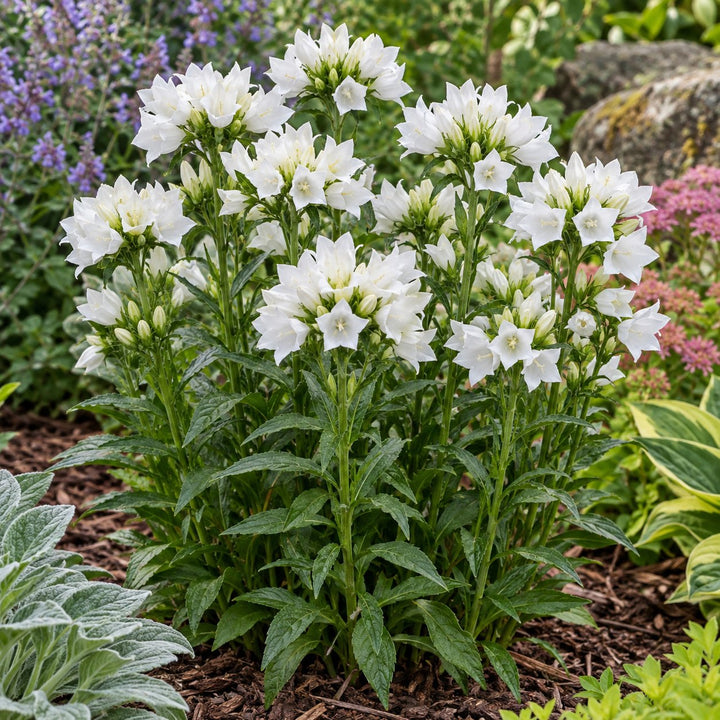
Angel Bells clustered bellflower tops each stiff, leafy stem with a tight, round cluster of upward-facing white bells, each about an inch long with five pointed lobes. The clean white stands out against rich, dark green, slightly rough leaves, and the clump stays compact at about 14 to 18 inches tall. Bees visit it constantly, and the stems last well in a vase.
Angel Bells at a glance
| Trait | What to expect |
|---|---|
| Botanical name | Campanula glomerata 'Angel Bells' |
| Flowers | Pure white bells in rounded clusters 2 to 3 inches across |
| Foliage | Dark green, lance-shaped |
| Size | 14 to 18 inches tall, 16 to 20 inches wide |
| Bloom | Starts early June, peaks mid-June, about seven weeks |
| Hardiness | USDA zones 3 to 8 |
| Light | Full sun to part shade |
| Wildlife | Great for pollinators; moderately deer resistant |
Where it sits beside lavender
Angel Bells blooms just before or along with the earliest lavenders, so its white globes greet the first purple spikes. White and purple is one of the simplest, most reliable color pairings in a garden, and the round shape of the bellflower heads contrasts well with lavender's narrow wands.
The one difference to plan for is water. Lavender likes to dry out; Angel Bells does not want to stay dry for long. Place it on the outer edge of the bed, where you can give it an occasional drink without soaking the lavender, or where the soil naturally holds a bit more moisture. In hot spells, a little afternoon shade helps its flowers last. Try placements in the Companion Plant Planner.
Planting and care
- Soil: average to fertile with good drainage. It appreciates neutral to slightly alkaline soil, which lavender likes too.
- Water: regular, especially in its first season and during dry, hot weather.
- After bloom: cut flowering stems back to the leaves to keep the clump tidy.
- Every few years: divide crowded clumps in spring.
- Watch for: powdery mildew or rust in crowded, muggy spots, and the occasional slug.
It is very hardy in Michigan and needs no winter protection.
A bouquet partner
Angel Bells is a good cut flower. Cut stems when about half the bells in a cluster are open. Mixed with fresh-cut lavender in June, it makes a crisp white-and-purple jar that looks right on a kitchen table. Plan a cutting row in the Cut Flower Planner.
The plug tray
Angel Bells is offered as a 72-cell plug tray, a good fit for edging a long bed, planting in groups or growing on for your own containers. See the product page for current availability.
Frequently asked questions
Does it spread?
Clustered bellflowers widen into a clump over time. Dividing every few years keeps it in bounds.
Will it rebloom?
It has one long bloom of about seven weeks. Cutting spent stems keeps it neat.
Is it hardy in cold winters?
Yes. It is rated for zones 3 to 8 and is very hardy in Michigan.

































Share how it went in your field