

Product Field NotesCompanion Plants
Apricot Sparkles Daylily: A Little Rebloomer for the Bed's Edge
 Save
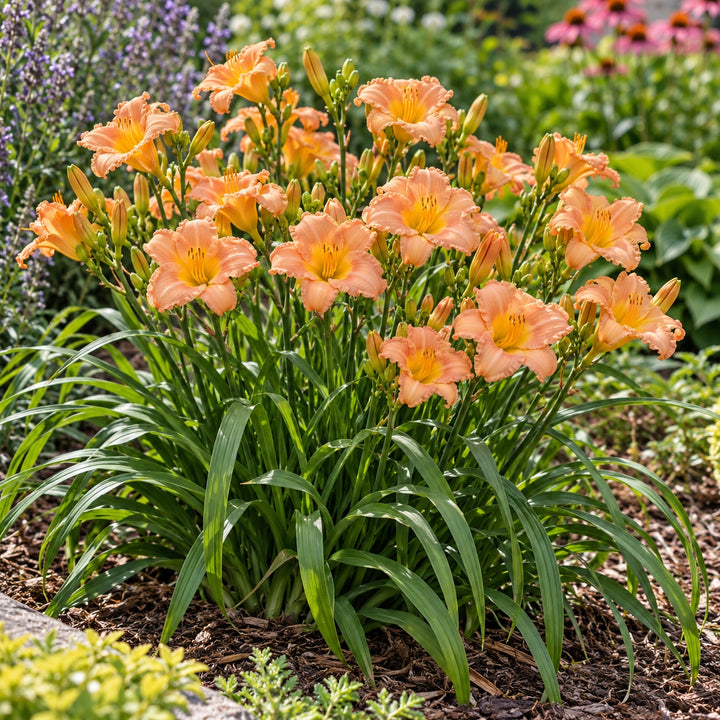
Apricot Sparkles daylily is a compact daylily and one of the most dependable rebloomers you can plant. Its neatly formed flowers, about 3 to 4 inches across, are soft apricot orange with ruffled edges, a golden throat and a fine diamond-dust sparkle when the sun hits them. The clump stays low, with flower scapes around 15 to 18 inches tall.
Apricot Sparkles at a glance
| Trait | What to expect |
|---|---|
| Botanical name | Hemerocallis 'Apricot Sparkles' |
| Flowers | Apricot with ruffled edges and golden throat, about 3 to 4 inches |
| Foliage | Medium green, arching; dormant in winter |
| Size | Foliage about 10 inches; scapes about 15 to 18 inches; 18 to 24 inches wide |
| Bloom | Starts late June, peaks mid-July, reblooms into late summer |
| Hardiness | USDA zones 3 to 9 |
| Light | Full sun to light part shade |
| Deer | Susceptible |
A gentle warm note with lavender
Not every garden wants the full fire of a red-orange daylily next to its lavender. Apricot Sparkles is the soft-spoken option. Its pale apricot flowers warm up the cool purple and silver of a lavender bed without shouting, and its small size keeps it in proportion with compact English lavenders.
It starts blooming in late June, alongside early lavender, and keeps going after the lavender is harvested, so the front edge of the bed stays in color through late summer. Use it to line a walk, ring a mailbox planting or fill containers. Since lavender needs airflow, plant the daylilies a little in front of the lavender rather than tucked against it. Sketch the edge in the Companion Plant Planner.
Keeping the rebloom coming
- Daily: each flower lasts one day. Snap off spent blooms so the plant does not waste energy on seed.
- After each flush: pull finished scapes down at the base to make way for new ones.
- Sun: at least six hours for the best bloom.
- Every few years: divide crowded clumps to keep them flowering freely.
Planting and winter
Soak the bare roots briefly before planting, spread them over a small mound in the hole and set the crown about an inch below the surface. Once established, it handles heat, clay and dry spells. It is a dormant type that dies back completely in fall, so clean up the foliage after hard frost and avoid soggy winter soil to prevent crown rot.
Frequently asked questions
How often does it rebloom?
It is rated high for rebloom, flowering in waves from late June through late summer with regular deadheading.
Is it good in containers?
Yes. Its compact size makes it one of the easier daylilies to grow in a pot. Water containers more often than garden beds.
What is the sparkle?
Some daylily petals have a crystalline texture often called diamond dust that glints in sunlight. Apricot Sparkles has it.

































Share how it went in your field