

Use & Care NotesLavender Plants
Baby Blue Lavender: The Old Dwarf English Lavender, Also Called Nana
 Save
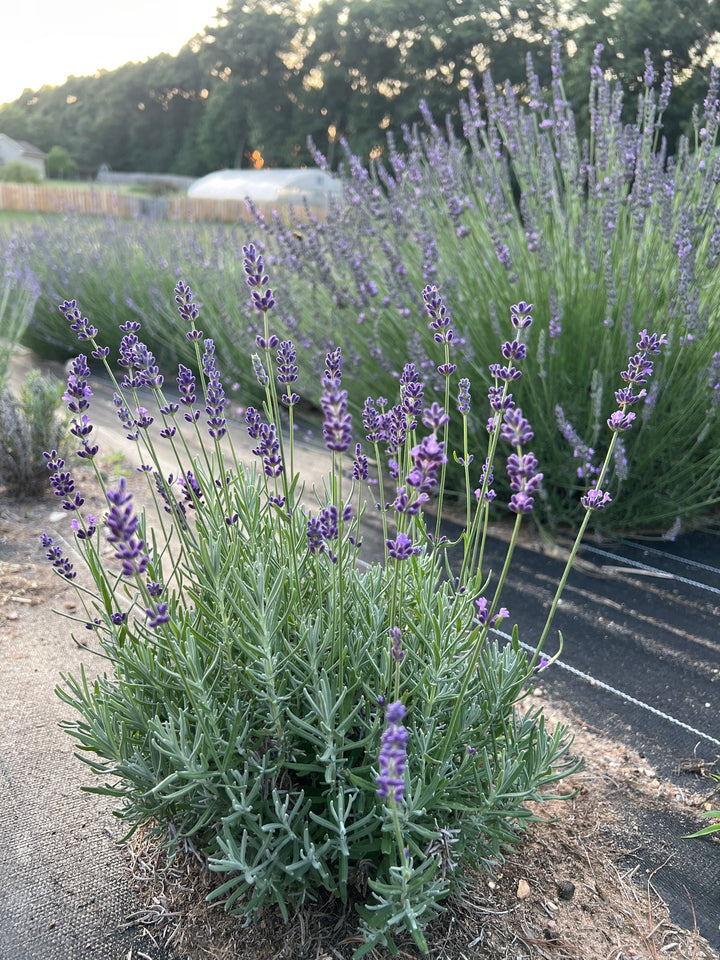
Baby Blue lavender is a dwarf English lavender with a long history. It has been grown since before 1911 and goes by a few names, including 'Nana' and 'Dwarf Blue'. It forms a dense, low shrub of gray-green aromatic leaves, usually about 16 inches tall, with slightly wispy flower stems carrying soft violet blooms and a sweet lavender scent.
Botanically it is Lavandula angustifolia, so it carries the hardiness and culinary quality of the English group in a size made for small spaces.
Baby Blue at a glance
| Trait | What to expect |
|---|---|
| Botanical name | Lavandula angustifolia 'Baby Blue' (also sold as 'Nana' or 'Dwarf Blue') |
| Introduced | Before 1911 |
| Flower color | Soft violet |
| Foliage | Gray-green, aromatic |
| Habit | Dense, dwarf and somewhat wispy |
| Mature size | Usually about 16 inches tall, occasionally to 24, and about 20 inches wide |
| Stems | About 8 to 10 inches |
| Bloom | From mid to late June, moderate rebloom |
| Hardiness | USDA zones 5a to 9b |
An heirloom dwarf with many names
Older lavenders often pick up several names as they pass through gardens over the decades, and this one is a good example. Whether you know it as Baby Blue, Nana or Dwarf Blue, you are looking for the same thing: a short, dense English lavender that has been edging paths and filling herb gardens for more than a century.
Where a dwarf lavender works best
- Knot and parterre gardens: its dense habit takes light shearing into low, neat lines.
- Path edges: plant about 16 to 18 inches apart for a soft, continuous border.
- Herb beds: it sits well beside thyme, chives and sage without shading them.
- Containers: one plant fills a 10- to 12-inch pot.
- Rock gardens: gravel around the crown keeps it dry and tidy.
It is a great pollinator plant, and deer tend to leave it alone.
Planting and care
Give it full sun and soil that drains quickly. In clay, plant on a raised bed or mound. Set the crown level with the soil and water deeply. As an English lavender, it needs a winter chill to bloom well, which Great Lakes winters provide.
- Water: deeply while it establishes, then sparingly.
- Feeding: little to none.
- After bloom: shear spent stems and a little leafy growth to keep it dense and encourage a smaller second flush.
- Pruning rule: stay in the green. Dwarf lavenders recover slowly from cuts into bare wood.
- Winter: keep the crown dry and free of matted leaves.
The Pruning Calendar covers timing.
Harvest and uses
Baby Blue is rated great for culinary use, with a sweet, low-camphor scent. A few plants in an herb bed supply enough buds for lavender sugar or shortbread. Harvest buds when colored but before most flowers open, dry in the shade and use sparingly, from plants grown as a food crop. It is rated good for fresh and dried flowers; its short stems suit sachets and small posies.
Formats offered
Baby Blue is listed as a 3-inch plug, a 4-inch pot or a 1-gallon pot. For a long edge, plugs keep costs down and fill in over a season or two. See the product page for current sizes and availability, and use Notify Me if it is not ready yet.
Frequently asked questions
Is Baby Blue the same as Nana or Dwarf Blue?
Yes. This lavender is listed under all three names.
How tall does it get?
Usually about 16 inches, occasionally up to about 24 inches, with a spread of around 20 inches.
Is it good for cooking?
Yes. It is an English lavender rated great for culinary use.



Share how it went in your field