

Use & Care NotesLavender Plants
Dutch Lavender: A Four-Foot Lavandin for Hedges and Harvests
 Save
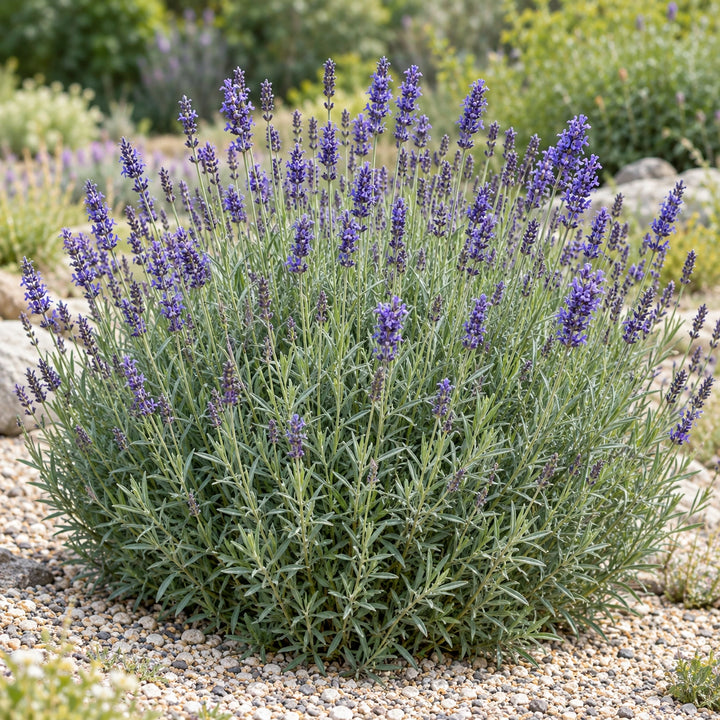
Dutch lavender is a lavandin that thinks big. It grows into a rounded, bushy mound up to about 4 feet tall and 4 feet wide, with silver-green to gray-green foliage and a heavy July flush of purple-blue flowers. The fragrance is strong and layered: sweet lavender on top, fresh camphor notes underneath, the classic sachet scent.
As a Lavandula × intermedia, a hybrid of English and spike lavender, it carries excellent ratings across the board for cut flowers, dried flowers, oil, u-pick bundles and commercial fields.
Dutch lavender at a glance
| Trait | What to expect |
|---|---|
| Botanical name | Lavandula × intermedia 'Dutch' |
| Flower color | Purple-blue |
| Foliage | Silver-green to gray-green |
| Habit | Bushy, rounded and mounding |
| Mature size | About 48 inches tall and 48 inches wide |
| Bloom | Mid-July, single flush, low rebloom |
| Hardiness | USDA zones 5a to 8b |
| Fragrance | Strong; sweet lavender layered with fresh camphor notes |
| Best uses | Oil, fragrance, fresh and dried bouquets, u-pick bundles |
Planning for a 4-foot plant
The most common mistake with Dutch lavender is underestimating it. A plug looks modest in spring; a mature plant can fill a 4-foot circle. Plan for that from the start:
- Hedges: space plants about 4 feet apart for a continuous, billowing hedge along a fence, drive or property line.
- Specimens: one plant at the corner of a bed or the end of a path makes a strong focal point.
- Production rows: leave room between rows to walk and harvest; airflow matters more on large plants.
- Not for: small pots, narrow strips or tight spots by a door.
It is an excellent pollinator plant, so expect a lot of buzzing in July, and deer tend to leave it alone.
Planting and care
Full sun and drainage are non-negotiable. Plant on raised rows or berms if your soil holds water, and set the crown level with the surface. Water deeply during the first season, then let rainfall do most of the work. Skip fertilizer; lean soil keeps big lavandins from flopping open.
Like other lavandins, it needs a winter chill to bloom well. After the July harvest, shape the plant into a rounded mound, cutting into leafy growth only. A large lavandin left unpruned can split open in the center over time, so a yearly shaping pays off. The Pruning Calendar shows when.
Harvest, bundles and sachets
Cut for dried bundles when most buds are colored and just a few flowers are open, ideally on a dry morning. Gather 50 to 100 stems, secure them with a rubber band and hang them upside down in a dark, airy spot. Once dry, the buds strip easily for sachets and potpourri.
Lavandins usually taste stronger and more camphor-forward than English lavender. Dutch holds a good culinary rating, but most cooks reach for English types for baking. The Harvest Calendar helps you plan cutting days.
Formats offered
Dutch lavender is listed as a 3-inch plug, a 4-inch pot or a 1-gallon pot. Because each plant covers so much ground, even a few plugs make a big impact in a couple of seasons. See the product page for current sizes and availability, and use Notify Me if it is not ready yet.
Frequently asked questions
How big does Dutch lavender get?
Up to about 48 inches tall and wide at maturity, among the largest lavenders.
Does it rebloom?
Rebloom is low. Expect one strong flush in mid-July.
Is it good for drying?
Yes. It is rated excellent for dried flowers and large bundles.
















Share how it went in your field