

Product Field NotesCompanion Plants
Becky Shasta Daisy: The Tall White Classic for Lavender Borders
 Save
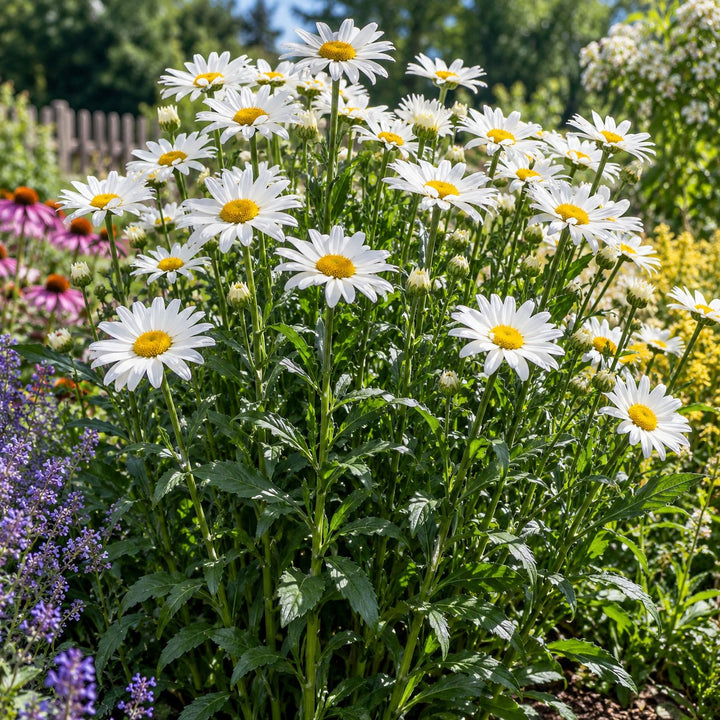
Becky shasta daisy is the white daisy most gardeners picture when they hear the words. Its 3-inch single flowers have crisp white petals around a golden center, held on tall, strong stems that rarely need staking. It was named Perennial Plant of the Year in 2003, largely because it handles hot, humid summers better than many older shastas.
Put it with purple lavender and you have the backbone of a cottage garden in two plants.
Becky at a glance
| Trait | What to expect |
|---|---|
| Botanical name | Leucanthemum × superbum 'Becky' |
| Flowers | 3-inch single daisies, pure white with golden centers |
| Foliage | Glossy dark green, toothed |
| Size | 36 to 42 inches tall, 18 to 24 inches wide |
| Bloom | Starts late June, peaks mid-July, continues with deadheading |
| Hardiness | USDA zones 5 to 9 |
| Cut flower | Excellent |
| Wildlife | Good for pollinators; moderately deer resistant |
How to use it with lavender
Height is Becky's job. At 3 to 3½ feet, it stands above most English lavenders, so plant it behind a lavender row or in clusters between groups where it can rise over the purple. It opens in late June and peaks in mid-July, which lines up neatly with the main lavender bloom.
The contrast is simple and it works: round white faces against narrow purple spikes, glossy dark leaves against silver foliage. Both plants want the same sunny, well-drained ground, so there is no compromise in care. Lay out a row in the Companion Plant Planner to see how the heights stack up.
Care that keeps it blooming
- Deadhead often: removing spent flowers keeps new buds coming well into late summer.
- Water wisely: help it through dry spells, but never let the soil stay soggy.
- Winter drainage: crown rot in wet, heavy soil causes most winter losses. Leave the basal leaves in place and cut the flowering stems in fall.
- Divide: every two to three years in spring. Shastas tend to fade if left crowded.
Watch for aphids and four-lined plant bugs on the leaves, and give plants airflow in humid weather to keep leaf spot down.
A cutting garden favorite
Becky's 30- to 40-inch stems make it one of the best shasta daisies for the vase. Cut when the flowers are fully open and the centers are still tight, strip the lower leaves and pair with fresh lavender for a bouquet that looks like it came straight off a farm table, because it did.
About the plug tray
Becky is offered as a 72-cell plug tray, ideal for long borders, mass plantings and cutting rows. See the product page for current availability or the Wholesale Hub for tray orders.
Frequently asked questions
Does Becky need staking?
Usually not. Its stems are strong for its height. Overly rich or wet soil can make any shasta flop, so keep it lean like the lavender.
How long does it bloom?
From early summer into late summer, longer if you keep deadheading.
Can it handle humid summers?
Yes. Its heat and humidity tolerance is one of the reasons it became a classic.

































Share how it went in your field