

Use & Care NotesCompanion Plants
Blue Ice Blue Star: Periwinkle Stars and Golden Fall Foliage
 Save
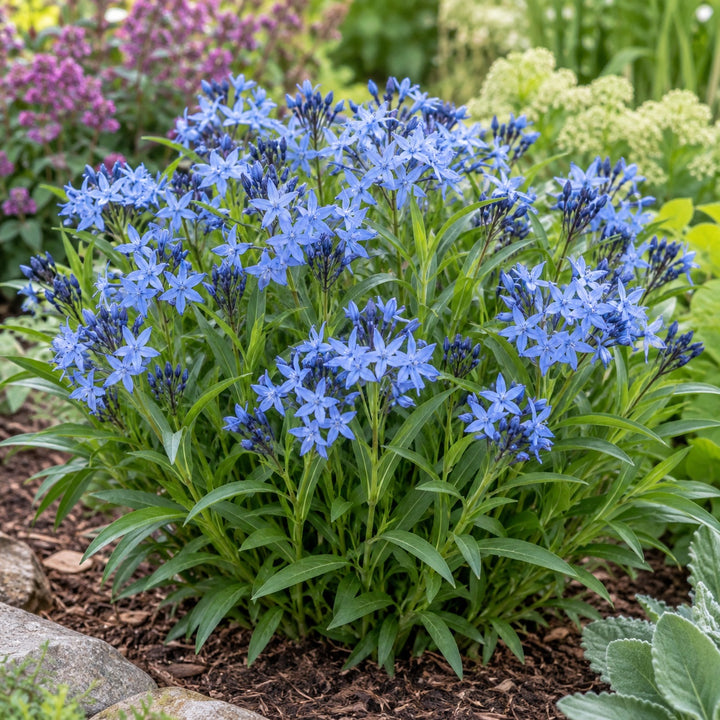
Blue Ice blue star is a compact amsonia with plump navy blue buds that open to vivid periwinkle, star-shaped flowers in late spring and early summer. The blooms are larger and broader-petaled than those of most blue stars, gathered in clusters at the stem tips. In fall, the bright green foliage turns golden yellow.
Two seasons of interest from one tidy mound is a good deal in any garden.
Blue Ice at a glance
| Trait | What to expect |
|---|---|
| Botanical name | Amsonia 'Blue Ice' |
| Flowers | About 1 inch, periwinkle blue stars from navy buds |
| Foliage | Bright green, narrow; golden yellow in fall |
| Size | 12 to 16 inches tall, 18 to 24 inches wide |
| Bloom | Late May to early June |
| Hardiness | USDA zones 3 to 9 |
| Light | Full sun to part shade |
| Deer | Resistant |
Bookends for the lavender season
Blue Ice blooms in late May and early June, just ahead of lavender, so its periwinkle stars open the blue-purple season. Then, after lavender is long finished, its foliage turns gold in fall and closes it. Plant the two in the same border and the color story runs from spring through autumn.
The one difference is water. Blue Ice prefers a bit more consistent moisture than lavender, so give it the moister edge of a sunny border: the side near the lawn, a spot that catches a little runoff or a bed you water occasionally. Keep the lavender on the drier, higher ground just beyond it.
Planting and care
- Planting: set the bare root plant with the crown at soil level and water in well.
- Soil: average with regular moisture; it tolerates poorer soil once established.
- After bloom: trim stems back lightly to keep a tight, shrub-like mound.
- Fall: leave the foliage standing to enjoy the yellow color, then cut back in late fall or early spring.
- Long term: it is long-lived and rarely needs dividing.
It is very heat tolerant and holds its foliage well through hot summers; full sun gives the best fall color. The stems have a milky sap that may irritate skin, so gloves help when trimming.
Where else it shines
Its compact size suits the front of a border, edging and mass plantings. It is a good choice for native and pollinator gardens, and deer tend to leave it alone.
Frequently asked questions
How is Blue Ice different from other blue stars?
It is more compact, with deeper periwinkle flowers and broader petals than most amsonias.
Is the fall color as strong as threadleaf blue star?
It turns a nice yellow, though it is somewhat less showy than the threadleaf types.
Can it grow right in the lavender bed?
It prefers more moisture, so the moister edge of the border is a better fit.
Keep exploring
Ready to plant it?
Sizes, prices and shipping times are on its page.


Share how it went in your field