

Product Field NotesCompanion Plants
Bridal Veil Astilbe: White Froth to Light Up a Shady Corner
 Save
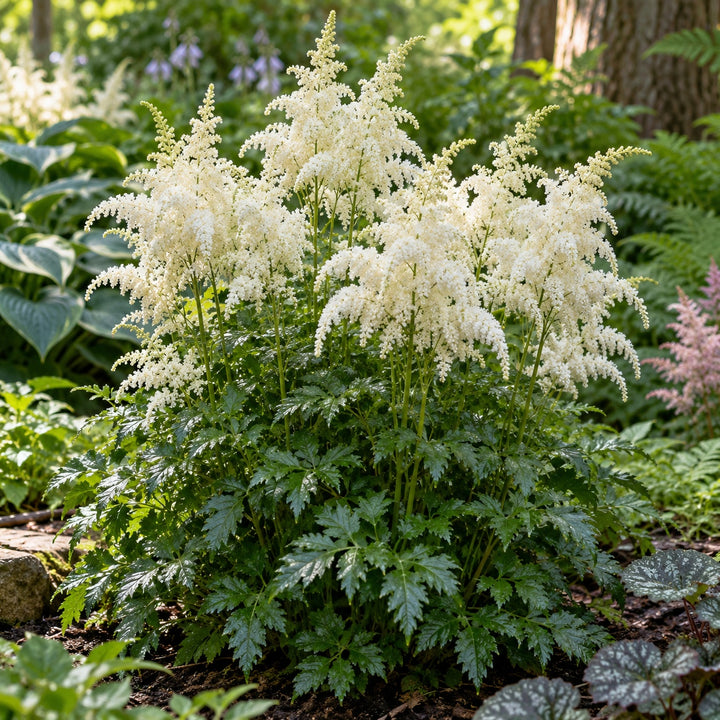
Bridal Veil astilbe is a classic white astilbe with lacy, loosely branched plumes that nod softly at the tips. In early summer it looks like a cloud of white froth floating over deep green, glossy leaves, and the foliage keeps the plant handsome before and after bloom.
White flowers are at their best in shade, and that is where Bridal Veil belongs. It needs rich, moist soil and protection from hot sun, so it grows on a different part of the property from your lavender.
Bridal Veil at a glance
| Trait | What to expect |
|---|---|
| Botanical name | Astilbe × arendsii 'Bridal Veil' (also known as 'Brautschleier') |
| Flowers | Pure white plumes, 8 to 10 inches long, fading to cream and tan |
| Foliage | Deep glossy green, finely divided |
| Size | About 28 inches tall in bloom, 18 to 22 inches wide |
| Bloom | Starts mid-June, peaks late June |
| Hardiness | USDA zones 4 to 9 |
| Recognition | RHS Award of Garden Merit |
| Deer | Resistant |
Why white in the shade
Dark colors get lost in shade, but white catches whatever light there is. A group of Bridal Veil under trees or along a shaded walk glows in the evening, when you are most likely to be out in the garden after a hot day. The glossy, dark leaves make the white plumes look even brighter.
It is a mid-size astilbe, a good choice for the middle of a shade bed. Put hostas or ferns in front and taller shade plants behind. If your garden plan pairs a sunny lavender area with a shady patio or sitting spot, Bridal Veil is an easy way to make the shady side feel just as finished. It blooms in late June, alongside the start of lavender season. Sketch both areas in the Companion Plant Planner.
Care through the year
- Spring: cut back last year's plumes and stems before new growth. Top-dress with compost, since astilbe crowns gradually rise above the soil line.
- Summer: water during dry spells. Astilbe leaves crisp and brown quickly in drought or hot sun.
- After bloom: the plumes fade from white to cream and then tan. Leave them; they add texture all winter.
- Every few years: lift and divide clumps whose crowns have risen or crowded.
- Problems: powdery mildew and leaf spot in crowded, muggy plantings; occasional Japanese beetles.
For cutting
Bridal Veil rates well for fresh cut and dried use. Cut plumes when most of the flowers are open. In a vase, white astilbe adds an airy filler around heavier flowers.
Ordering format
Bridal Veil is offered as a bare root plant. Set it with the buds just below the surface and keep the soil moist while roots settle. See the product page for current availability.
Frequently asked questions
Could I grow astilbe next to lavender if I watered it more?
It would not work well. The water astilbe needs would rot lavender, and the full sun lavender needs would scorch astilbe. Separate beds suit both.
Do rabbits eat it?
Deer and rabbits usually leave astilbe alone.
Will it grow in a pot?
Yes. It is listed for containers. Use rich potting mix and water often.

































Share how it went in your field