

Product Field NotesCompanion Plants
Bressingham Beauty Astilbe: Arching Salmon-Rose Plumes for Shade
 Save
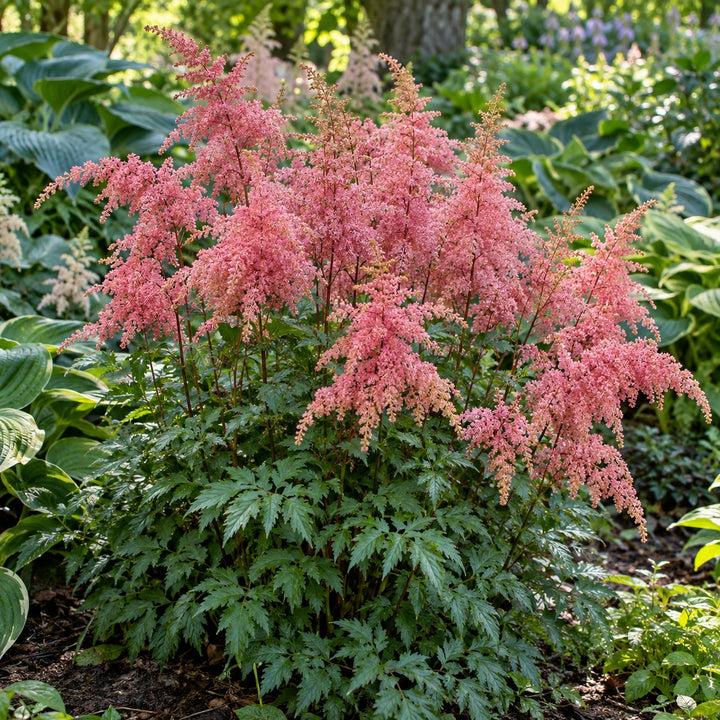
Bressingham Beauty astilbe is a tall astilbe known for its graceful plumes. Instead of standing stiff and upright, its 10- to 12-inch plumes of tiny dusty salmon-rose flowers arch and droop at the tips, giving the plant a relaxed, elegant look over a bushy clump of finely cut green leaves.
It is a shade plant that wants rich, moist soil, which is the opposite of what lavender needs. In the garden the two live apart. In the house, though, they can meet: astilbe plumes dry well, and they look lovely in a bundle with dried lavender.
Bressingham Beauty at a glance
| Trait | What to expect |
|---|---|
| Botanical name | Astilbe × arendsii 'Bressingham Beauty' |
| Flowers | Dusty salmon-rose, arching plumes 10 to 12 inches long |
| Foliage | Medium green, finely divided and fernlike |
| Size | About 36 inches tall in bloom, 24 to 30 inches wide |
| Bloom | Starts mid-June, peaks early July |
| Hardiness | USDA zones 4 to 9 |
| Light | Part shade is best; takes more sun in the north if kept moist |
| Deer | Resistant; rabbits leave it alone too |
Where it belongs
Give it a shade garden, a damp woodland edge or the north side of a building where the soil holds moisture. It is tall enough to stand at the back of a shade bed, with hostas and ferns in front. Mass a few together and the arching plumes make a soft rose-colored wave in early summer. It also grows well in large containers if you keep up with watering.
Bressingham Beauty blooms from mid-June into early July, the same weeks lavender is in full color in the sunny beds, so both sides of the garden peak at once. Map shade and sun areas together in the Companion Plant Planner.
Drying the plumes
This astilbe rates well for both fresh cutting and drying. For drying, cut plumes when most of the tiny flowers are open but before they start to brown. Strip the lower leaves, bundle a few stems loosely and hang them upside down in a dark, dry, airy spot, the same way you would hang lavender. The salmon-rose color softens to a dusty pink, which is very pretty against dried lavender's purple and gray.
Leave some plumes on the plant too. They dry in place to a rusty tan that adds texture through winter.
Planting and care
- Soil: rich and humus-heavy, never allowed to dry out.
- Water: during every dry spell. Drought-scorched, crispy leaves are the most common astilbe problem.
- Mulch: a layer of shredded leaves or compost holds moisture.
- Spring: cut back last year's stems before new growth.
- Every few years: astilbe crowns slowly rise above the soil. Top-dress with compost or lift and divide the clump.
- Watch for: powdery mildew or leaf spot in crowded, muggy plantings, and occasional Japanese beetles.
Ordering format
Bressingham Beauty is offered as a bare root plant. Plant it with the growing points just below the soil surface and keep it watered while it settles. See the product page for current availability.
Frequently asked questions
Is it fragrant?
No. Astilbe is grown for its plumes and foliage. In a dried bundle, the lavender provides the scent.
Can it take full sun?
In Michigan it can handle more sun if the soil stays consistently moist, but part shade is safer and keeps the leaves from scorching.

































Share how it went in your field