

Product Field NotesCompanion Plants
Bowles Golden Sedge: A Patch of Gold for Wet, Shady Ground
 Save
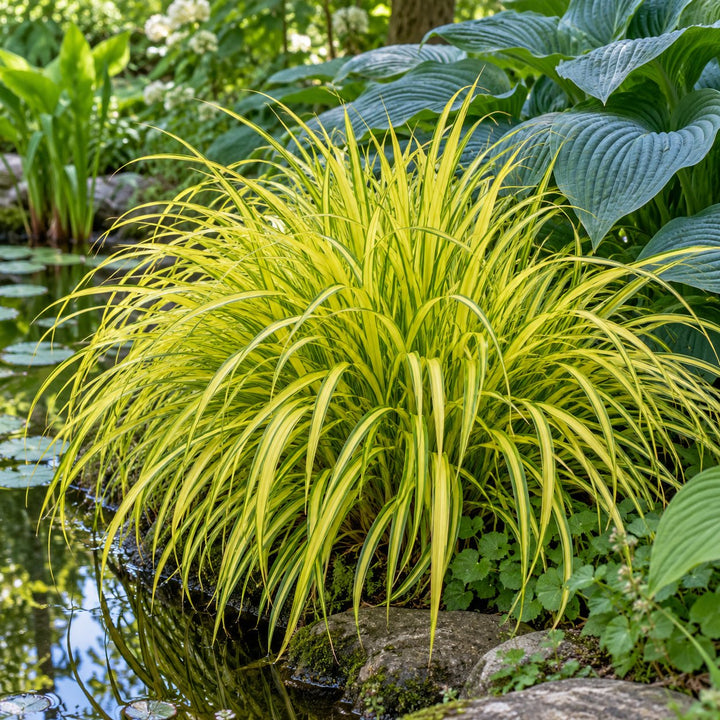
Bowles Golden sedge is a tall, bright grass-like plant with golden yellow leaves edged in a thin line of green. It grows two to three feet tall and wide, larger than most sedges, and in a shady, damp corner it glows like a patch of sunlight that forgot to leave.
Its secret is water. Bowles Golden thrives in constantly wet soil and can even grow in up to about two inches of standing water, which makes it one of the few plants we would point you to for ground that is far too wet for lavender.
Bowles Golden at a glance
| Trait | What to expect |
|---|---|
| Botanical name | Carex elata 'Bowles Golden' (also listed as 'Aurea') |
| Foliage | Bright golden yellow with thin green margins |
| Flowers | Small dark brown spikes in spring; not showy |
| Size | 24 to 36 inches tall and wide |
| Hardiness | USDA zones 5 to 8 |
| Light | Part sun to part shade; best color with morning sun |
| Water | Constantly moist to wet; tolerates about 2 inches of standing water |
| Deer | Resistant |
The wet corner of a lavender property
Lavender growers spend a lot of effort keeping water away from their plants: raised beds, gravel, slopes. That water has to go somewhere, and the low spot where it collects is a perfect home for Bowles Golden. Planting the wet areas with plants that love them is part of a good overall garden plan.
It looks especially good next to blue-leaved hostas, where the gold and blue play off each other. Around a pond, its arching leaves soften the edge and reflect in the water. The Companion Plant Planner can help you map dry lavender beds and wet areas together.
Planting and care
- Light: morning sun and afternoon shade give the brightest gold. In hot sites the leaves scorch unless the soil stays wet; in deeper shade the color is softer.
- Soil: fertile and constantly moist or wet. Do not let it dry out.
- Spring cleanup: it is deciduous, dying back in winter and resprouting in spring. Comb or cut out the old leaves in early spring.
- Problems: few. Rust and crown rot are occasional, and slugs may chew the leaves in shade.
- Winter: overwinters well in wet sites within zones 5 to 8.
Ordering format
Bowles Golden is offered as a 72-cell plug tray, a practical way to plant along a pond, a ditch or a large rain garden. See the product page for current availability, or the Wholesale Hub for tray orders.
Frequently asked questions
Can I grow it in a regular garden bed?
Only if the bed stays consistently moist. In average or dry soil the leaves brown, especially in sun.
Is it a true grass?
No. Sedges look grass-like but belong to a different plant family. They generally prefer more moisture than ornamental grasses.
Do bees use it?
Its pollinator value is low. It is grown for foliage.

































Share how it went in your field