

Product Field NotesCompanion Plants
Candyland™ Mix Lupine: Early Spikes That Hand Off to Lavender
 Save
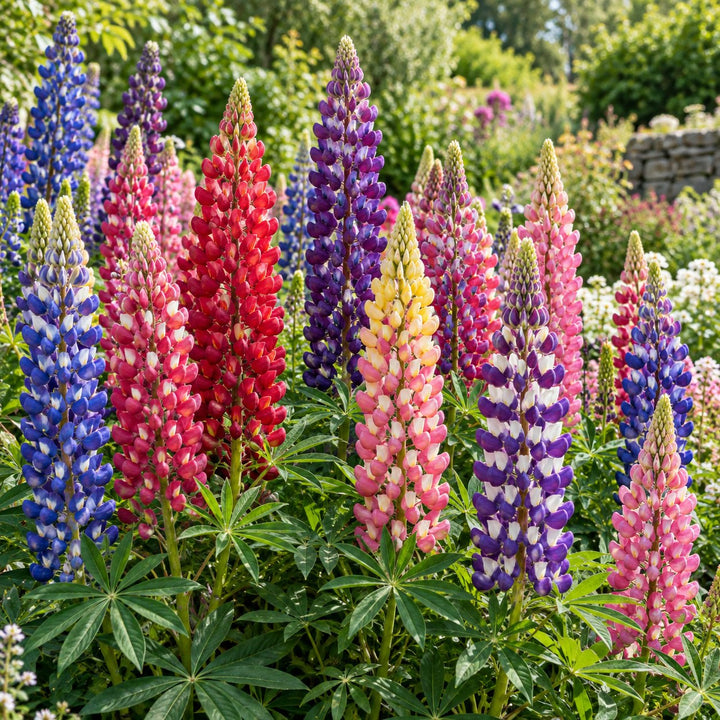
Candyland™ Mix lupine is a seed-grown strain of tall lupines with extra-long spikes packed with large, pea-like florets. No two plants are quite alike: a planting turns up solid reds, blues, purples and pinks alongside bicolors trimmed in white or yellow. It is a box of crayons that grows three feet tall.
For a lavender garden, timing is the selling point. Lupines peak in mid-June, just before the first lavender wands open, so the color passes from one plant to the other with hardly a gap.
Candyland Mix at a glance
| Trait | What to expect |
|---|---|
| Botanical name | Lupinus 'Candyland Mix' (seed strain) |
| Flowers | Mixed red, blue, purple and pink, plus white and yellow bicolors, on spikes 12 inches or longer |
| Foliage | Dark green, palmate leaves like the spokes of a wheel |
| Size | 30 to 42 inches tall, 24 to 30 inches wide |
| Bloom | Starts early June, peaks mid-June, one main flush |
| Hardiness | USDA zones 4 to 8 |
| Light | Full sun to light afternoon shade |
| Wildlife | Great for bees, butterflies and hummingbirds; moderately deer resistant |
How it plays with lavender
Lupine spikes rhyme with lavender wands, only bigger and bolder, so the two look related without competing. Because Candyland Mix stands well above most lavenders, it belongs behind them or at the back corners of a bed, where its dark green, wheel-shaped leaves also set off lavender's silver foliage.
The blues and purples in the mix echo lavender directly, while the reds, pinks and yellow bicolors add a cottage-garden spark. Both plants dislike heavy clay and standing water, so a site that suits one usually suits the other. Sketch the spacing in the Companion Plant Planner.
Planting and care
- Site: full sun, or a little afternoon shade where summers run hot. Lupines prefer cool nights and may fade after bloom in hot weather.
- Soil: average, well-drained and slightly acidic. Skip the rich compost and never plant in a low, soggy spot.
- Water: regularly while plants establish, then during long dry spells. Leave room between plants, since humid heat invites mildew.
- Pests: lupine aphid is the main one. Check stem tips in late spring and rinse colonies off with water.
- Winter: hardy in Michigan with sharp drainage. Wet winter soil is what rots the crown.
Lupines grow a deep taproot and dislike being moved, so choose the spot once. They are also often short-lived; letting a few seed heads ripen gives you volunteers to carry the planting forward.
Cutting and enjoying the spikes
Candyland Mix is a good cut flower with a light, sweet, peppery scent. Cut spikes when the lower florets are open and the tip is still in bud, and cut the remaining spent spikes back in the garden to encourage side shoots. They do not dry well, so enjoy them fresh. The seeds and foliage contain alkaloids, so this is an ornamental, never a food plant.
About the plug tray
This lupine is offered as a 72-cell plug tray. Young plugs suit a plant that resents transplanting later. See the product page for current availability, or visit the Wholesale Hub for tray orders.
Frequently asked questions
Will every plant be a different color?
Most likely. This is a seed mix, so colors vary from plant to plant. Plant in groups for the fullest rainbow effect.
Why did my lupines thin out after a few years?
Lupines are often short-lived, especially where summers are hot or winters are wet. Leave a few seed heads to ripen and self-sow, and the planting renews itself.

































Share how it went in your field