

Product Field NotesCompanion Plants
Captain Kirk Hosta: A Gold Beacon for the Shady Side of the Garden
 Save
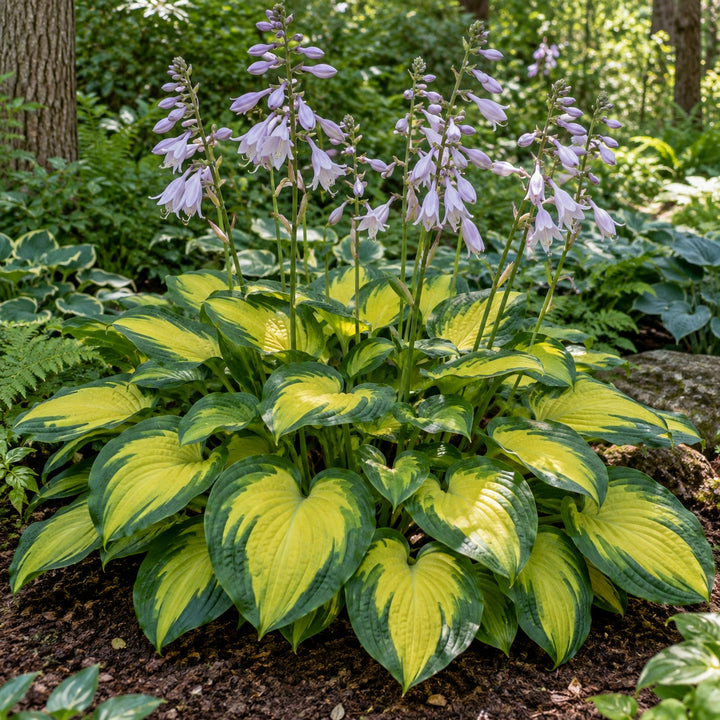
Captain Kirk hosta has broad, heavy, heart-shaped leaves with bright gold centers and wide, dark green margins. It is an improved form of the classic Gold Standard, with much wider margins and thicker leaves, and it holds the Royal Horticultural Society's Award of Garden Merit.
Let us be honest up front: Captain Kirk boldly goes where lavender cannot, into the shade. It does not belong in your lavender bed, but it is one of the best ways to brighten the shady side of the same property.
Captain Kirk at a glance
| Trait | What to expect |
|---|---|
| Botanical name | Hosta 'Captain Kirk' |
| Foliage | Bright gold center with a wide, dark green margin; thick, heavy leaves |
| Flowers | Pale lavender bells on 30-inch stems |
| Size | About 20 inches tall and 36 inches wide |
| Bloom | Starts early July, peaks mid-July |
| Hardiness | USDA zones 3 to 9 |
| Light | Part sun to part shade, or full shade |
| Deer | Susceptible; deer like hostas |
A shade partner, not a bedmate
Lavender wants hot sun and lean, quick-draining soil. Captain Kirk wants shade and soil that stays evenly moist. Put them together and one of them will be unhappy. Instead, think of the whole yard: lavender in the open sunny beds, and Captain Kirk in the shady beds by the house, along a woodland edge or under a tree canopy.
The two still tie together. Captain Kirk's pale lavender flower spires in midsummer echo the color of the lavender bloom out in the sun, and its glowing gold centers light up dark corners the way lavender lights up a bright one. Pair it with ferns, coral bells and other shade plants. The Companion Plant Planner helps you sort sun and shade zones.
Planting and care
- Planting: set the bare root crown so the growing points sit just at the soil surface, spread the roots and water well.
- Soil: humus-rich and evenly moist but not waterlogged, especially in winter.
- Light: shade from afternoon sun. Leaves can scorch in hot, dry sites.
- Water: during dry spells. Steady moisture keeps those thick leaves looking their best.
- Slugs: the main pest in damp springs. Keep mulch thin near the crown.
- Fall: cut collapsed foliage down after hard frost to reduce slug eggs and disease.
Divide crowded clumps in spring as the new shoots appear. Destroy any plant with mottled or distorted leaves, since that can signal hosta virus.
Specimen or mass planting
At three feet wide, a single Captain Kirk makes a bright specimen at the end of a shady path. Several in a row turn a dim foundation bed into a gold-and-green ribbon. It also grows well in a large container on a shaded porch.
Frequently asked questions
Can Captain Kirk take any sun?
Some gentle morning sun is fine. Afternoon sun, especially in a dry spot, can scorch the leaves.
How do I keep deer off it?
Deer do browse hostas. Plant it close to the house or inside a fenced area if deer visit your garden.
How is it sold?
As a bare root plant. See the product page for current availability.

































Share how it went in your field