

Product Field NotesCompanion Plants
Capture the Flag Foamy Bells: Chartreuse and Red for Shady Beds
 Save
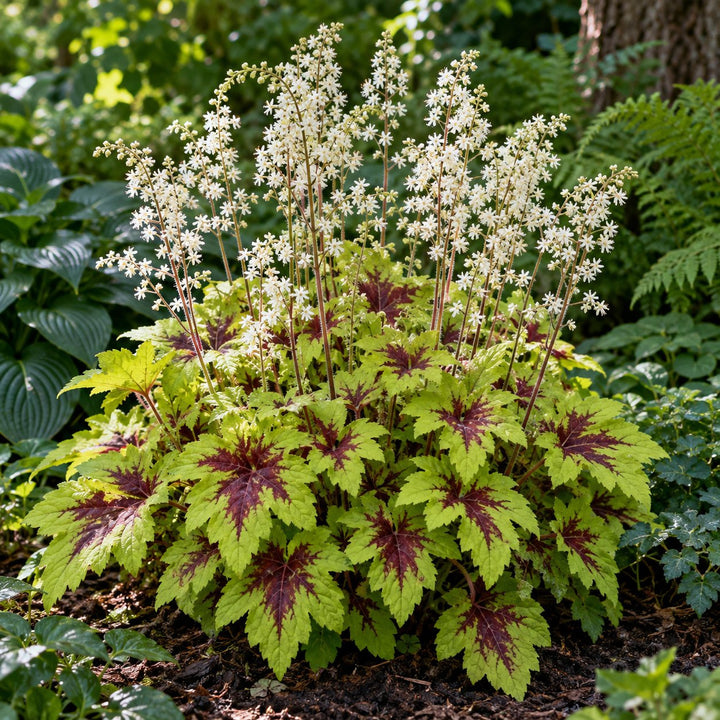
Capture the Flag foamy bells is a large-leaved × Heucherella, the cross between coral bells and foamflower. Its deeply lobed, pointed leaves are bright chartreuse with a bold burgundy-red blotch at the center that follows the main veins, a combination that practically waves at you from across the yard.
It is a shade plant, so it will not join the lavender in the sunny bed. Its job in a lavender garden plan is to bring color to the shady beds nearby.
Capture the Flag at a glance
| Trait | What to expect |
|---|---|
| Botanical name | × Heucherella 'Capture the Flag' |
| Foliage | Chartreuse with burgundy-red centers; semi-evergreen in mild winters |
| Flowers | Frothy white clouds on pale 20- to 22-inch stems |
| Size | 8 to 10 inches tall, 16 to 18 inches wide |
| Bloom | Starts mid-May, peaks late May |
| Hardiness | USDA zones 4 to 9 |
| Light | Part sun to part shade, or full shade |
| Deer | Moderately resistant |
Its place in a lavender garden
Lavender asks for full sun and dry, lean soil, and foamy bells asks for the opposite: shade and steady moisture. So plan them as neighbors on the same property rather than in the same bed. Capture the Flag is ideal along a shaded walk, under deciduous trees or in the cool bed on the north side of a building.
There, its chartreuse leaves glow against dark green ferns and blue hostas, and its burgundy centers pick up red-leaved coral bells. The new leaves appear early in spring, well before the lavender wakes up, and stay attractive into fall. Use the Companion Plant Planner to sort out your sun and shade groupings.
Planting and care
- Light: it was bred for better heat and sun tolerance than typical foamy bells, but leaf color is best with filtered sun or afternoon shade in hot summers.
- Soil: average to fertile, well-drained and evenly moist. Soggy soil, especially in winter, causes crown rot.
- Planting depth: set plugs with the crown level with the soil surface.
- After bloom: the flowers are sterile. Remove the stems once they fade to keep the mound tidy.
- Winter: hardy in Michigan in well-drained soil. Mulch lightly after the ground freezes to prevent heaving, then trim winter-damaged leaves in spring.
Edging, containers and drifts
At 8 to 10 inches tall, Capture the Flag is a natural edging plant for shady paths. It is just as useful in containers, where its color holds all season, and a drift of several plants turns a dim spot into a patchwork of lime and red.
Choosing a tray
It is offered as a 72-cell plug tray and as a deeper 20-cell plug tray. The 72-cell tray suits growers filling large areas or potting up stock, while the 20-cell tray gives larger plugs for a quicker start. See each product page for current availability, or visit the Wholesale Hub.
Frequently asked questions
What is the difference between foamy bells and coral bells?
Foamy bells is a hybrid of coral bells and foamflower. It tends to have more deeply lobed leaves and frothy flower sprays.
Will it grow in full sun next to my lavender?
Not happily. It handles more sun than older foamy bells, but the best color and health come with shade and even moisture.

































Share how it went in your field