

Use & Care NotesCompanion Plants
Caradonna Salvia: Dark Stems and Violet Spikes Beside Lavender
 Save
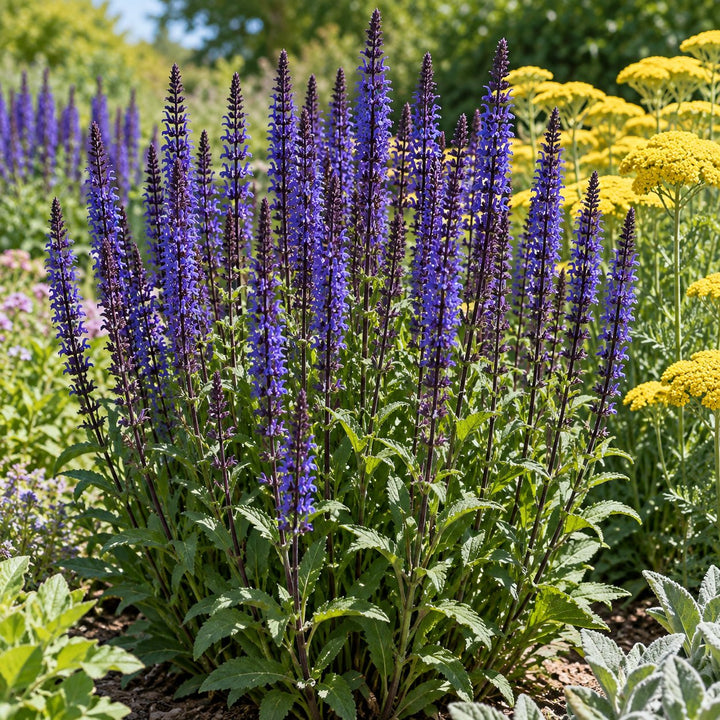
Caradonna salvia is the one you notice first in a sunny border. Its stems are so dark they look almost black-purple, and they hold stiff, candle-straight spikes of bright violet-blue flowers. It holds the Royal Horticultural Society's Award of Garden Merit and has been a border favorite for years.
It is also a near-perfect lavender companion. The two want the same sun and the same lean soil, and the salvia's upright spikes echo lavender's shape in a deeper, bluer tone.
Caradonna at a glance
| Trait | What to expect |
|---|---|
| Botanical name | Salvia nemorosa 'Caradonna' |
| Flowers | Bright violet-blue spikes on dark purple stems |
| Foliage | Mid to deep green, lance-shaped, mildly sage-scented when brushed |
| Size | 24 to 30 inches tall, about 15 inches wide |
| Bloom | Starts early June, peaks mid-June, repeats after shearing |
| Hardiness | USDA zones 3 to 8 |
| Light | Full sun |
| Wildlife | Excellent for bees and butterflies; deer resistant |
Why it works with lavender
Most companions contrast with lavender. Caradonna rhymes with it. Both make upright spikes in the purple-blue range, but Caradonna's are bluer and its dark stems add a line of near-black that makes the whole planting look sharper. It is taller and much narrower than most nemorosa salvias, so it slips between lavender mounds without crowding them.
It also fills the calendar. Caradonna opens in early June, often just ahead of the main lavender bloom, and a shearing brings more spikes later in summer after the lavender harvest. Try it in drifts of three between lavender groups, or as an upright row behind a low English lavender. The Companion Plant Planner helps with spacing.
Planting and care
- Site: full, hot sun gives the best flowering.
- Soil: average and well-drained. Wet, heavy winter soil is the main cause of loss.
- Water: regularly the first season; very drought tolerant once established.
- Shearing: cut the plant back by about a third, or cut spikes back to fresh growth, once the first flush fades.
- Airflow: in muggy, crowded plantings the leaves can pick up powdery mildew after the first bloom. Shearing and spacing help.
- Winter: reliably hardy in Michigan. Leave the stems standing or cut them in fall, and clean up old growth in spring as new leaves appear.
Cutting and drying
Caradonna is one of the best salvias for cutting, and it dries well too. The dark stems stay handsome even after the petals drop. Cut spikes when most of the florets are open and hang small bunches to dry. Dried Caradonna and dried lavender make a bouquet in two shades of purple. It is not a culinary sage, so keep it in the vase, not the kitchen.
Plug tray or bare root
Caradonna is offered as a 72-cell plug tray for growers planting in quantity and as a bare root plant for home gardens. See each product page for current availability, or visit the Wholesale Hub for tray orders.
Frequently asked questions
Will Caradonna flop over?
It is known for a narrow, rigidly upright habit. Rich soil and too much water are what make salvias lean, so keep it lean like your lavender.
How do I get a second bloom?
Shear after the first flush fades. New growth follows, with more spikes later in summer.
Keep exploring
Ready to plant it?
Sizes, prices and shipping times are on its page.



Share how it went in your field