

Product Field NotesCompanion Plants
Cutting Edge Foamflower: Lacy Native Groundcover for Shade
 Save
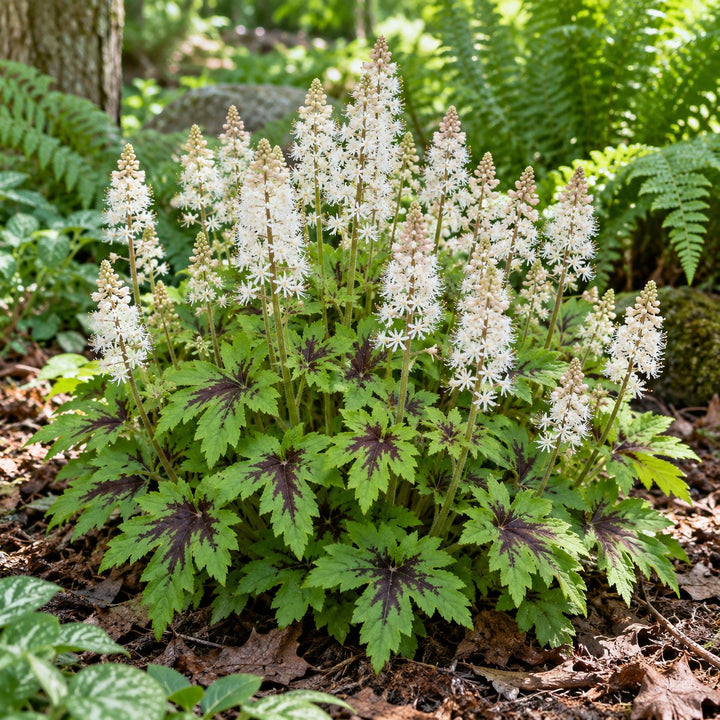
Cutting Edge foamflower is a native Tiarella with leaves cut so deeply they look like a hand with long, pointed fingers, bright green with a dark burgundy blotch down the center. In spring, pale pink buds open into fluffy creamy white spikes that cover the whole clump. It stays in a neat mound rather than running, so it behaves well in beds and pots.
It is a shade plant through and through, which means its place is on the cool, shady side of the garden, not in the sunny lavender beds.
Cutting Edge at a glance
| Trait | What to expect |
|---|---|
| Botanical name | Tiarella 'Cutting Edge' |
| Foliage | Deeply cut, bright green with a dark burgundy center; semi-evergreen |
| Flowers | Creamy white bottlebrush spikes from pale pink buds |
| Size | 8 to 10 inches tall, 16 to 18 inches wide |
| Bloom | Starts mid-April, peaks early May |
| Hardiness | USDA zones 4 to 9 |
| Light | Part to full shade |
| Deer | Moderately resistant |
The shady half of a lavender garden plan
Foamflower needs moist, woodsy soil and protection from afternoon sun, the exact opposite of lavender's lean, sunbaked bed. So plan it as part of the bigger picture: under trees, along a shaded walk or on the north side of the house, where lavender would never thrive. It blooms in April and May, weeks before the lavender opens, so the property has spring color while the lavender is still waking up.
It plays especially well with hostas and ferns. The finely cut leaves contrast with broad hosta foliage, and the burgundy centers pick up dark stems on painted ferns. The Companion Plant Planner can help you lay out a shade bed alongside your sunny beds.
Planting and seasonal care
- Spring: enjoy the bloom, then remove spent flower stems to keep the mound neat.
- Summer: keep the soil evenly moist and the plant out of afternoon sun to avoid leaf scorch.
- Fall: add a layer of shredded leaves to keep roots cool and moist.
- Winter: hardy in Michigan, with semi-evergreen leaves that often darken in cold weather. Trim tattered leaves in spring.
Its main risk is crown rot in wet, heavy soil, so moist does not mean soggy. Slugs may visit in damp years.
Edging, groundcover and pots
Plant several in a group for a lacy groundcover under shrubs, or line a shady path with them. In containers, a single plant gives you foliage interest from spring to frost. Cutting Edge is offered as a full 72-cell plug tray, a good size for groundcover plantings. See the product page for current availability.
Frequently asked questions
Is foamflower a native plant?
Yes. Foamflower is native to eastern North American woodlands, which makes it a natural fit for native and woodland gardens.
Will it spread across the bed?
No. Cutting Edge is a clumping type, so it widens slowly instead of running.
Can it take morning sun?
Gentle morning sun is fine with steady moisture. Hot afternoon sun is what scorches the leaves.

































Share how it went in your field