

Use & Care NotesLavender Plants
Cynthia Johnson Lavender: Rated to Zone 4 for Cold Gardens
 Save
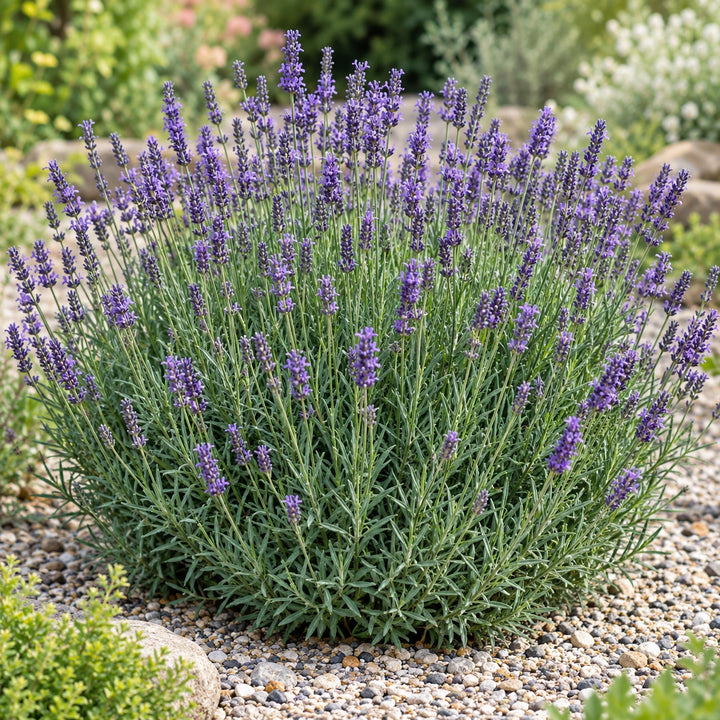
Cynthia Johnson lavender stands out for one number: zone 4a. Most English lavenders are rated to zone 5, so a cultivar listed down to 4a gets the attention of gardeners in colder pockets of Michigan, the Upper Midwest and anywhere winter means business. It pairs that hardiness with purple flowers, green foliage and a vigorous, upright habit.
Botanically it is Lavandula angustifolia 'Cynthia Johnson'. It blooms early, starting in early June and peaking by mid-June, with a sweet floral scent and soft herbal notes.
Cynthia Johnson at a glance
| Trait | What to expect |
|---|---|
| Botanical name | Lavandula angustifolia 'Cynthia Johnson' |
| Flower color | Purple |
| Foliage | Green |
| Habit | Upright and vigorous |
| Mature size | About 36 inches tall and 36 inches wide |
| Stems | About 12 inches |
| Bloom | Starts early June, peaks mid-June, moderate rebloom |
| Hardiness | USDA zones 4a to 9b |
| Fragrance | Strong, sweet and floral with low camphor |
Growing lavender where winters are hard
Cold alone is rarely what ends a lavender. It is cold combined with wet soil, ice sitting on the crown or repeated freeze and thaw. A zone 4a rating gives Cynthia Johnson a margin, but the same rules still decide whether it thrives:
- Drainage first: raised beds, berms or slopes keep roots out of icy, waterlogged soil.
- Snow is your friend: a steady snow cover insulates plants. Avoid spots where plowed or roof snow piles up and melts into slush around the crown.
- No wet mulch on the crown: if you mulch, use gravel or a loose layer kept a few inches from the stems.
- Plant early enough: spring planting gives roots a full season before their first winter. The Frost Date Estimator helps you pick a date.
- Do not prune late: finish shaping by late summer so new growth can firm up before cold weather.
Check your zone with the USDA Zone Finder.
Where it fits
At about 3 feet tall and wide, Cynthia Johnson is a substantial plant. Use it as a hedge along a sunny fence or drive, a backbone in a mixed border or a row in a cutting garden. Its green foliage sets off the purple flowers clearly. It is a great pollinator plant, and deer tend to leave it alone.
Care through the year
Water deeply during the first season, whenever the top few inches of soil are dry, then only during long droughts. Skip fertilizer; lean soil gives sturdier stems. After the mid-June bloom, shear spent stems and a bit of leafy growth to shape the plant and encourage a moderate rebloom. Never cut into bare wood. The Pruning Calendar shows the timing.
Harvest and uses
Cynthia Johnson is rated great for culinary use, with excellent oil suitability, and its best uses are listed as oil and fragrance. Harvest culinary buds in mid-June when they are colored but before most flowers open. Dry in the shade and use a light hand, from plants grown as a food crop. It is rated good for fresh and dried flowers, and its 12-inch stems suit small bundles and sachets.
Formats offered
Cynthia Johnson is listed as a 3-inch plug, a 4-inch pot or a 1-gallon pot. In very cold areas, a gallon plant with a larger root system can establish faster in its first season. See the product page for current sizes and availability, and use Notify Me if it is not ready yet.
Frequently asked questions
Is Cynthia Johnson really hardy to zone 4?
It is rated for zones 4a to 9b. Drainage and winter wetness still matter more than temperature alone.
When does it bloom?
It starts in early June and peaks in mid-June, with a moderate rebloom after shearing.
Is it good for cooking?
Yes. It is an English lavender rated great for culinary use.
















Share how it went in your field