

Use & Care NotesLavender Plants
Dark Eyes Lavender: Purple-Red Butterfly Blooms That Dry Well
 Save
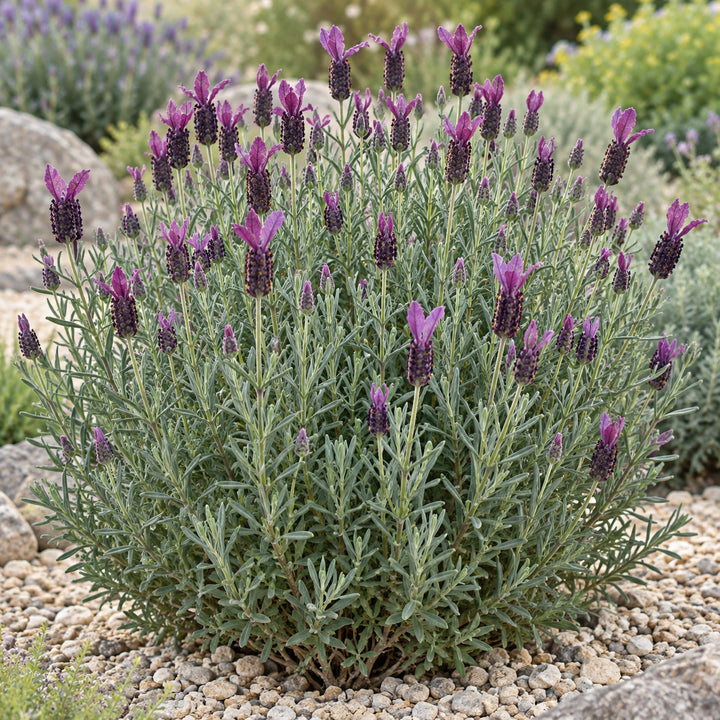
Dark Eyes lavender brings an unusual color to the lavender bed: purple-red. Its chunky flower heads, topped with flared flags, sit on a bushy, compact mound of gray-green foliage about 2 feet tall and wide. It flowers early in the season, reblooms heavily and carries a strong, bold, resinous-herbal scent.
Botanically it is Lavandula pedunculata, often called butterfly lavender, a close relative of Spanish lavender known for holding its blooms up on long, bare stalks.
Dark Eyes at a glance
| Trait | What to expect |
|---|---|
| Botanical name | Lavandula pedunculata 'Dark Eyes' |
| Flower color | Purple-red |
| Foliage | Gray-green |
| Habit | Bushy and compact |
| Mature size | About 24 inches tall and 24 inches wide |
| Bloom | Starts early May, peaks late May in warm climates, high rebloom |
| Hardiness | USDA zones 7a to 9b |
| Fragrance | Strong, bold, resinous and herbal |
| Culinary use | Not recommended |
Color that stands apart
Purple-red is rare in lavender, and it changes the palette you can build around it. Dark Eyes looks rich beside burgundy-leaved plants, coral and magenta flowers, and silver foliage. In a container, one plant can carry a warm-toned design that a blue lavender would cool down.
It is a great pollinator plant, and deer tend to leave it alone.
Growing it well
Cold tolerance in butterfly lavender depends a good deal on the plant's origin and conditions, so the zone rating, 7a to 9b, is your best guide. In those zones, it can live in a raised, gravelly, sunny bed. In colder areas, including most of Michigan, grow it in a pot:
- Container: drainage holes and a gritty, fast-draining mix.
- Light: full sun on a deck, patio or step.
- Water: let the top of the mix dry between waterings.
- Winter: move it to a bright, cool, frost-free spot before hard freezes and keep it on the dry side.
- Spring: bring it back outside gradually after frost danger passes.
It does not need a winter chill to bloom, so new plants flower soon after potting.
Deadheading and shaping
Snip spent flower heads back to the foliage throughout the season to keep the high rebloom going. After a big flush, a light all-over trim keeps the mound dense. Avoid cutting into bare wood. The Plant Care Guide covers the basics.
Drying the flowers
Many Spanish-type lavenders dry poorly, but Dark Eyes is rated good for both fresh and dried flowers, and its listed best use is fragrance. To dry, cut stems when heads are fully colored, bundle a few together and hang them upside down in a dark, airy spot. The purple-red heads add an unexpected color to dried arrangements, wreaths and potpourri bowls. Culinary use is not recommended.
Formats offered
Dark Eyes is listed as a 3-inch plug, a 4-inch pot or a 1-gallon pot. See the product page for current sizes and availability, and use Notify Me if it is not ready yet.
Frequently asked questions
Is Dark Eyes a Spanish lavender?
It is Lavandula pedunculata, a close relative often grouped with Spanish lavender. The two share a similar look and care.
Can I dry Dark Eyes?
Yes. It is rated good for dried flowers, better than many of its relatives.
How does it differ from Castilliano?
Both are listed as L. pedunculata. Dark Eyes is purple-red and about 2 feet tall, while Castilliano is deep purple and smaller.
















Share how it went in your field