

Product Field NotesCompanion Plants
Delft Lace Astilbe: Apricot Plumes Over Blue-Green Lace
 Save
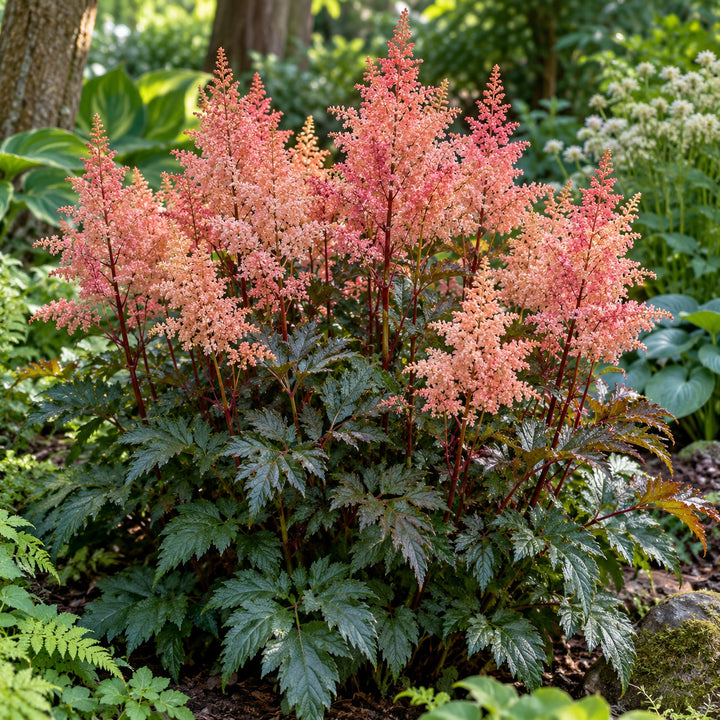
Delft Lace astilbe is worth growing for its leaves alone. The foliage is lacy and finely cut, deep blue-green with a waxy finish and red highlights along the stems and edges, and it picks up burgundy tones in fall. In mid to late June, red stems carry deep salmon red buds that open into soft apricot pink plumes, and the deep red seed heads that follow keep the color going.
Delft Lace at a glance
| Trait | What to expect |
|---|---|
| Botanical name | Astilbe 'Delft Lace' |
| Flowers | Soft apricot pink plumes from salmon red buds; seed heads turn deep red |
| Foliage | Deep blue-green, lacy, red highlights; burgundy tones in fall |
| Size | 24 to 36 inches tall, about 24 inches wide |
| Bloom | Starts mid-June, peaks late June |
| Hardiness | USDA zones 4 to 9 |
| Light | Part shade; more sun in the north if kept moist |
| Deer | Resistant; rabbits leave it alone |
The shady counterpart to a lavender bed
Delft Lace and lavender bloom at nearly the same moment, late June, but in completely different places. The lavender wants a hot, dry, sunny bed; Delft Lace wants a cool, moist, partly shaded one. Plan them as two halves of one garden: purple spikes in the sun, apricot plumes in the shade, both peaking together.
The blue-green leaves are what tie it all together. They have the same cool cast as lavender's gray foliage, so even after the plumes fade, the shade bed looks related to the sunny one. Pair it with hostas, ferns and other woodland plants along a damp edge. The Companion Plant Planner helps you map both areas.
Planting the bare root
- Soak the roots briefly before planting.
- Set the crown at soil level in rich, humus-rich soil with compost worked in.
- Water deeply and mulch to hold moisture.
- Keep the soil evenly moist through the first summer.
Care through the seasons
Water during dry spells; leaf scorch from drought is the most common astilbe problem. In warmer zones, afternoon shade matters. Leave the plumes and seed heads standing after bloom for texture, then cut back in spring. Over the years the crowns slowly rise out of the soil, so top-dress with compost or divide every few years. It is hardy in Michigan.
Both cutting and drying rate well. For dried stems, cut plumes when about half open and hang them upside down. It is offered as a bare root plant; see the product page for current availability.
Frequently asked questions
How does it compare with older peach astilbes?
Delft Lace has stronger stems and richer color than older peach-toned types, plus more striking foliage.
Will it bloom in deep shade?
It grows in shade, but flowers best with bright part shade or, in northern gardens, some sun with steady moisture.
Is it good for dried arrangements?
Yes. Both the apricot plumes and the deep red seed heads dry well.

































Share how it went in your field