

Use & Care NotesLavender Plants
Elizabeth Lavender: Thick Purple Spikes for Fresh and Dried Bouquets
 Save
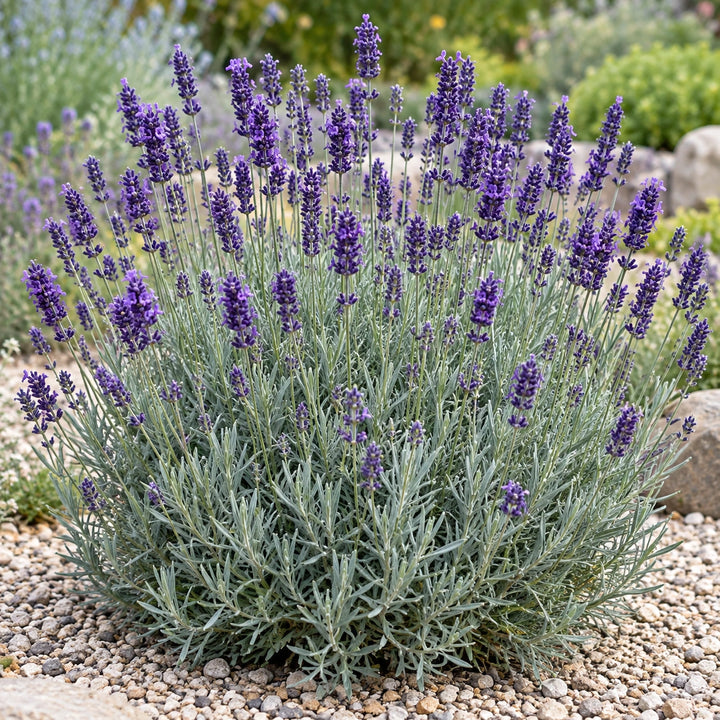
Elizabeth lavender is an English lavender with florist-friendly qualities. Its thick, deep purple flower spikes stand on strong stems over very silvery, blue-gray foliage, and those stems hold their color and shape well both fresh and dried. The fragrance is a classic English lavender scent.
Botanically it is Lavandula angustifolia 'Elizabeth'. It grows upright to about 2 feet tall and 30 inches wide and blooms from early June to a mid-July peak.
Elizabeth at a glance
| Trait | What to expect |
|---|---|
| Botanical name | Lavandula angustifolia 'Elizabeth' |
| Flower color | Deep purple, on thick spikes |
| Foliage | Very silvery, blue-gray |
| Habit | Upright, with strong stems |
| Mature size | About 24 inches tall and 30 inches wide |
| Bloom | Starts early June, peaks mid-July, moderate rebloom |
| Hardiness | USDA zones 5a to 9b |
| Fragrance | Strong, classic English lavender |
| Culinary rating | Great |
A lavender built for arranging
What makes a lavender good in a vase? Straight, strong stems that do not flop; spikes full enough to read from across the table; and color that holds. Elizabeth checks those boxes. Its thick spikes look substantial in a bouquet, and its stems stay upright in fresh arrangements and keep their structure once dried.
Its silvery foliage is a bonus in the garden. Against blue-gray leaves, the deep purple flowers look even richer, and the plant stays attractive out of bloom. It is a great pollinator plant, and deer tend to leave it alone.
Planting and care
- Sun: full sun, six to eight hours or more.
- Soil: fast-draining sandy or loamy soil. Raise beds in clay.
- Spacing: about 24 to 30 inches apart.
- Chill: it needs winter cold to bloom well and is among the hardier lavenders.
- Water: deeply in the first season, then sparingly.
- Feeding: little or none. Lean soil keeps those stems strong.
- Shearing: after the main harvest, trim spent stems and some leafy growth. Stay out of bare wood.
For a seasonal checklist, see the Care Calendar.
Cutting for fresh and dried bouquets
- Fresh bouquets: cut when about a third of the flowers on each spike have opened. Strip the lower leaves and place stems in cool water right away.
- Dried bundles: cut when buds are fully colored and only a few flowers are open, which holds the deepest color.
- Bundling: gather small bunches and secure them with a rubber band, which tightens as the stems shrink.
- Drying: hang upside down in a dark, dry, airy room for one to two weeks.
- Storing: keep finished bundles out of direct sun so the purple lasts.
The Cut Flower Planner can help you plan a cutting garden around it.
In the kitchen
Elizabeth is rated great for culinary use, like most English lavender, and has excellent oil suitability. For cooking, harvest buds when colored but before most flowers open, dry them in the shade and use sparingly, from plants grown as a food crop.
Formats offered
Elizabeth is listed as a 3-inch plug, a 4-inch pot or a 1-gallon pot. See the product page for current sizes and availability, and use Notify Me if it is not ready yet.
Frequently asked questions
Is Elizabeth good for dried flowers?
Yes. Its strong stems hold their color and structure well when dried.
Why are its leaves so silver?
Elizabeth is known for very silvery, blue-gray foliage, which sets off its deep purple flowers.
When should I harvest?
From early summer to midsummer. Cut earlier for drying and a little later for fresh bouquets.
Keep exploring
Ready to plant it?
Sizes, prices and shipping times are on its page.

















Share how it went in your field