

Use & Care NotesLavender Plants
Essence Purple Lavender: Blueberry Color for Bouquets and Rows
 Save
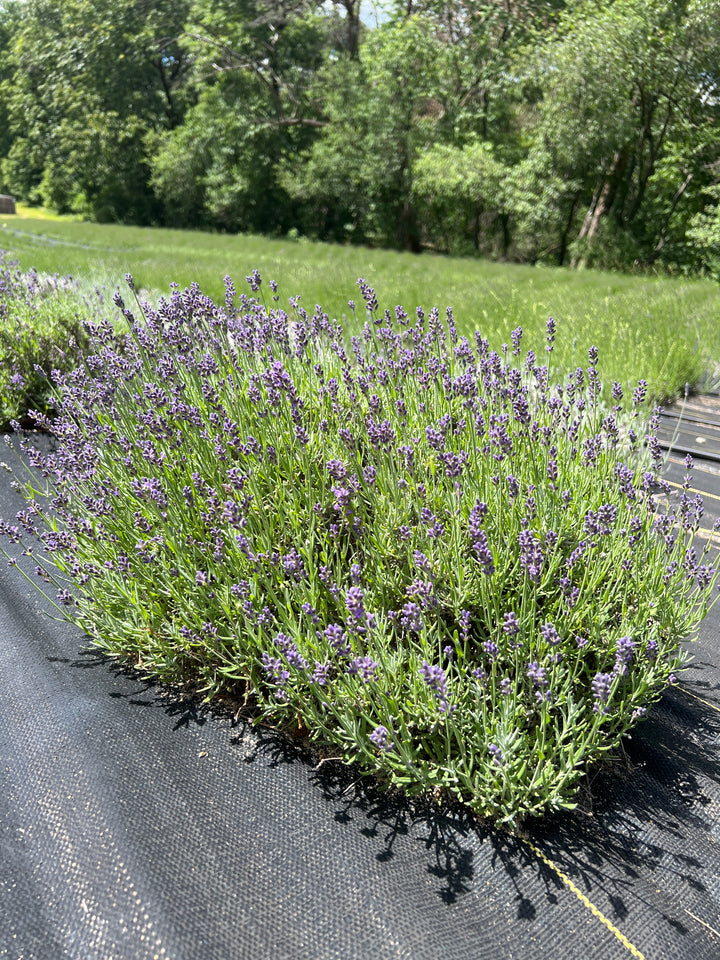
Essence Purple lavender is an English lavender with flowers the color of ripe blueberries, a bright purple that leans toward blue. It forms a rounded, dense clump of gray-green foliage about 18 inches tall and 24 inches wide, and it is one of the better English lavenders for cutting, rated excellent for both fresh and dried use.
Essence Purple at a glance
| Trait | What to expect |
|---|---|
| Botanical name | Lavandula angustifolia 'Essence Purple' |
| Flower color | Bright blueberry-purple |
| Foliage | Gray-green, dense |
| Mature size | About 18 inches tall and 24 inches wide |
| Bloom | Starts early June, peaks early August, moderate rebloom |
| Hardiness | USDA zones 5a to 9b |
| Cut and dried | Excellent for both |
| Fragrance | Strong, sweet and floral with low camphor |
A long season for cutting
Many English lavenders rush through bloom in a few weeks. Essence Purple starts in early June and reaches its peak in early August, which gives you a long window to cut fresh bunches, then come back for drying stems later. Its dense habit means plenty of spikes per plant, and the blueberry color holds well when dried.
For fresh bouquets, cut when about a third of each spike is open and put the stems straight into cool water. For drying, cut when the buds are fully colored and just a few flowers have opened, then hang small bunches upside down in a dark, airy room. The Cut Flower Planner can help you plan a cutting row.
Planting and spacing
Choose full sun and well-drained soil. Space plants about 24 inches apart for distinct mounds or 18 inches for a hedge that knits together. In clay, use raised rows or mounded beds. Water deeply at planting and through the first summer whenever the top few inches of soil are dry.
Essence Purple benefits from winter chilling to flower well, which suits cold-winter gardens like ours in West Michigan.
Care notes
- Water: low needs once established. Too much water is a bigger risk than too little.
- Fertilizer: rarely needed. Lean soil keeps stems firm.
- Pruning: harvesting does much of your pruning. After the last cut, shape the mound lightly and stay out of the old wood. See the Pruning Calendar.
- Kitchen: as an English lavender it rates well for culinary use; use food-grown buds sparingly.
Four ways to buy it
Essence Purple is offered in more formats than most: individual 3-inch plugs, 4-inch pots and 1-gallon pots for home gardens; full 72-cell and deep 20-cell plug trays for growers planting rows or potting up; and bare root plants for direct planting. See each product page for current sizes and availability, and the Wholesale Hub for tray and bare root orders.
Frequently asked questions
Is it more purple or blue?
It sits right between, a bright blueberry-purple that looks bluer in shade and more purple in full sun.
What should I do with bare root lavender when it arrives?
Plant it promptly. Soak the roots briefly, spread them in a wide hole, set the crown at soil level and water in well.
Is Essence Purple a good market lavender?
Its excellent cut and dried ratings and long bloom season make it a strong choice for bundle growers. It rates good for commercial field use.
Keep exploring
Ready to plant it?
Sizes, prices and shipping times are on its page.

















Share how it went in your field