

Product Field NotesCompanion Plants
Etched Glass Hosta: Bright Gold Centers and Fragrant Late Flowers
 Save
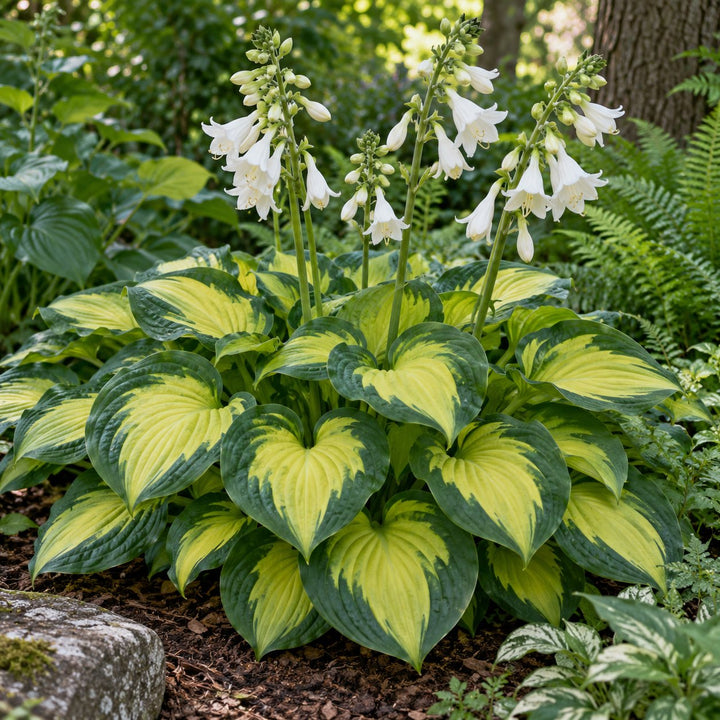
Etched Glass hosta has thick, rounded leaves with bright yellow centers framed by very wide, dark green margins, with a thin light green band where the two colors meet. As the plant matures, those margins pucker slightly, adding texture to the shine. In August, tall stems carry very large, near-white trumpet flowers with a light fragrance.
Like all hostas, it is a shade plant, so it does not belong in the lavender field. It does belong in a moist, shaded bed elsewhere on the same property, where its gold centers brighten a dim corner the way lavender lights up a sunny one.
Etched Glass at a glance
| Trait | What to expect |
|---|---|
| Botanical name | Hosta 'Etched Glass' |
| Foliage | Bright yellow center, very wide dark green margin |
| Flowers | Very large, lightly fragrant, near-white trumpets |
| Bloom | Starts early August, peaks mid-August |
| Size | About 18 inches tall and 36 inches wide; flower stems about 36 inches |
| Hardiness | USDA zones 3 to 9 |
| Light | Part shade to full shade |
| Deer | Susceptible |
A shade partner in a lavender garden plan
Most lavender gardens have a shady side, whether it is under a maple, along the north wall or beside a porch. Etched Glass is a good candidate for that spot. The gold centers read as light from across the yard, and the dark green margins keep the plant from looking washed out.
Pair it with coral bells, ferns and bleeding hearts for a full shade bed. Dark-leaved coral bells look especially sharp against the yellow. The late-summer flowers also fill a gap: by August most lavender has been harvested, and Etched Glass is just sending up its fragrant white trumpets, which hummingbirds visit. Sketch the sunny and shady zones together in the Companion Plant Planner.
Planting and care
- Light: shade from afternoon sun. Hot, dry sites can scorch the leaves.
- Soil: humus-rich, evenly moist and well drained, never waterlogged in winter.
- Spacing: it grows quickly to about 3 feet wide, so leave room.
- Slugs: the thick leaves hold up better than thin ones, but keep mulch thin near the crown and check in damp springs.
- Fall cleanup: remove collapsed leaves after a hard frost to reduce slug eggs and disease.
- Dividing: split crowded clumps in spring as the shoots emerge.
Containers and cut stems
Etched Glass also works in a large container on a shaded patio, where you can enjoy the fragrance up close. Use a pot with drainage holes and water more often than you would in the ground. The tall flower stems can be cut for a vase, and a few hosta leaves make a handsome base for summer arrangements.
About the plug tray
This hosta is offered as a 72-cell plug tray, ideal for growers and anyone planning a larger shade planting. See the product page for current availability.
Frequently asked questions
Can Etched Glass grow next to lavender?
Not in the same bed. It needs shade and steady moisture, while lavender needs full sun and dry, lean soil. Give it a shady spot on the same property.
Are the flowers really fragrant?
Yes, lightly. The large near-white trumpets have a mild scent that is easiest to notice up close.
What should I do with mottled leaves?
Mottled or distorted leaves can signal hosta virus. Remove and destroy the plant rather than dividing it.

































Share how it went in your field