

Use & Care NotesLavender Plants
Fairy Wings Pink Lavender: Spanish Lavender with Pink Flags
 Save
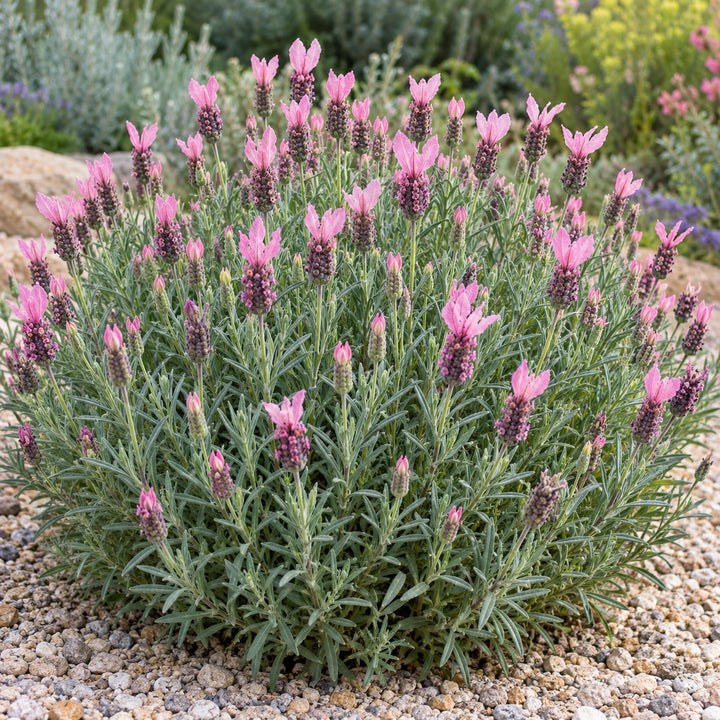
Fairy Wings Pink lavender is a Spanish lavender, the kind with chunky flower heads topped by upright petals that flutter like little flags. Its flowers are pink over gray-green foliage, and the plant forms a compact mound that spreads much wider than it is tall, up to about 20 inches high and more than 3 feet across in a warm climate.
Spanish lavender is a different animal from English lavender: earlier, showier, more resinous in scent, and less tolerant of cold. Know that going in and it is a lot of fun to grow.
Fairy Wings Pink at a glance
| Trait | What to expect |
|---|---|
| Botanical name | Lavandula stoechas 'Fairy Wings Pink' |
| Flowers | Pink heads with flared top petals |
| Foliage | Gray-green |
| Mature size | Up to about 20 inches tall and 39 inches wide |
| Bloom | Starts early May, peaks early June in warm climates, high rebloom |
| Hardiness | USDA zones 7a to 9b |
| Fragrance | Strong, bold and resinous with camphor and eucalyptus-like notes |
| Wildlife | Great for pollinators; deer resistant |
What makes Spanish lavender different
The petals on top of each flower head are actually sterile bracts, and they are the whole show. They give Spanish lavender its playful look and a long season, since new heads keep coming as old ones are removed. The scent is sharper and more piney than English lavender, so think of it as a garden and patio plant rather than a culinary one. It is not recommended for cooking.
For a primer on the different lavender types, see Lavender Botanical Groups.
Growing it in a cold-winter garden
In zones 7 and warmer, plant Fairy Wings Pink in the ground in full sun and lean, well-drained soil, leaving plenty of room for its wide spread. In colder gardens, it shines in containers:
- Use a wide pot with a drainage hole and a gritty, fast-draining mix.
- Place it in the sunniest spot on the patio or deck.
- Water when the top inch or two of mix is dry, more often in hot weather than you would for in-ground lavender.
- Before hard frost, move it to a cool, bright window or an unheated sunroom. Water sparingly through winter and return it outdoors after your last frost. The Frost Date Estimator gives you the dates.
Grown for one season, expect a smaller plant than its full warm-climate size.
Keeping the flowers coming
Fairy Wings Pink reblooms freely if you keep removing faded heads. Snip each spent stem back to the foliage, and after a big flush give the whole plant a light trim. Avoid hard cuts into woody stems. Skip rich fertilizer, which pushes leaves over flowers.
Cutting and enjoying it
The flower heads are good in small fresh arrangements and look charming in a bud vase. They are only fair for drying, since the bracts tend to shrivel, so enjoy them fresh. Pollinators visit it heavily, and deer tend to leave it alone.
Plant sizes
Choose 3-inch plugs, 4-inch pots or 1-gallon pots. Gallons make an instant patio container; plugs work well for mixed pots. See the product page for current sizes and availability.
Frequently asked questions
Will Fairy Wings Pink survive a Michigan winter outdoors?
Generally no. It is rated for zones 7a to 9b, and most of Michigan is colder than that. Grow it as a container plant you bring in, or as a seasonal plant.
Can I cook with it?
It is not recommended for culinary use. For baking, choose an English lavender.
How often will it rebloom?
Rebloom is high. With regular deadheading it keeps sending up new heads through much of the growing season.
Keep exploring
Ready to plant it?
Sizes, prices and shipping times are on its page.

















Share how it went in your field