

Use & Care NotesLavender Plants
Fairy Wings Spellbound: Deep Lavender Color for Sunny Pots
 Save
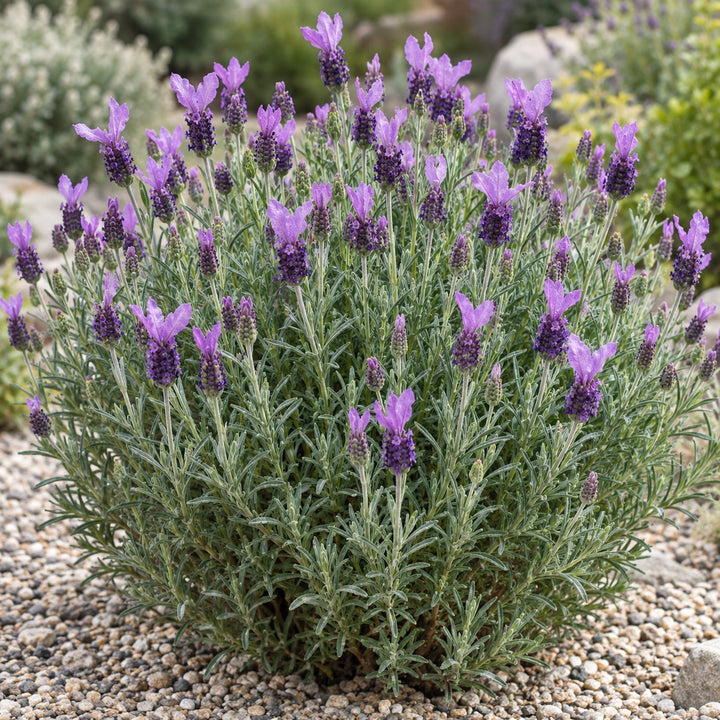
Fairy Wings Spellbound lavender is a Spanish lavender in a rich, deep lavender shade, closer to lilac-purple than to the pinks and whites in the same group. Each fat flower head carries a little crown of upright petals, and the plant grows into a bushy, compact shape that can reach a little over 2 feet tall and wide in a warm climate.
It is the Fairy Wings color most people picture when they hear the words purple Spanish lavender, and it pulls its weight on a sunny patio from late spring on.
Fairy Wings Spellbound at a glance
| Trait | What to expect |
|---|---|
| Botanical name | Lavandula stoechas 'Fairy Wings Spellbound' |
| Flowers | Deep lavender to lilac-purple heads with flared top petals |
| Foliage | Gray-green |
| Mature size | Up to about 27.6 inches tall and wide |
| Bloom | Starts early May, peaks late May in warm climates, high rebloom |
| Hardiness | USDA zones 7a to 9b |
| Fragrance | Strong, bold and resinous with camphor and eucalyptus-like notes |
Best uses
Spellbound is a container star. One gallon plant in a glazed pot makes a finished centerpiece for a table or a front step. Its balanced, bushy shape also works as the thriller in a mixed planter with trailing silver plants or low annuals that like it dry. In zone 7 and warmer, use it in hot, dry beds, along gravel paths or in rock gardens.
Like all Spanish lavenders, it is grown for looks and fragrance rather than the kitchen; it is not recommended for culinary use. The scent is bold and resinous, closer to rosemary than to English lavender.
A container routine that works
- Pot: pick one with a drainage hole and a few inches of room beyond the root ball. Terra cotta helps the mix dry evenly.
- Mix: use a fast-draining potting mix with extra grit or perlite.
- Sun: six or more hours of direct sun daily.
- Water: soak it when the top inch or two is dry, then let it drain. Never let it sit in a saucer of water.
- Feeding: a light feeding in spring is plenty.
Keeping it blooming
Rebloom is high when you stay on top of deadheading. Cut faded heads back to the leaves every week or so. After a heavy flush, trim the whole plant lightly to keep it rounded. Avoid cutting into old, leafless wood, which may not resprout.
Getting through winter
In gardens colder than zone 7, bring the pot inside before hard frost. A cool, bright window or an unheated sunroom works best; warm, dim rooms make it leggy. Water lightly, just enough to keep the roots from drying completely, and move it back outdoors after your last spring frost. Check yours with the Frost Date Estimator.
Plant sizes
Offered as 3-inch plugs, 4-inch pots and 1-gallon pots. See the product page for current sizes and availability.
Frequently asked questions
Is this the same as FW Spellbound?
No. Our catalog also has an FW Spellbound that is a different species, Lavandula pedunculata, and much smaller. Fairy Wings Spellbound is a Lavandula stoechas that grows a little over 2 feet tall and wide in warm climates.
Can I dry the flowers?
They are good for fresh arrangements but only fair for drying, since the petals on top shrivel as they dry.
Do bees like it?
Yes. It rates great for pollinators, and deer tend to ignore it.
Keep exploring
Ready to plant it?
Sizes, prices and shipping times are on its page.

















Share how it went in your field