

Use & Care NotesLavender Plants
Fathead Lavender: Plump Spanish Lavender Heads in Purple and Pink
 Save
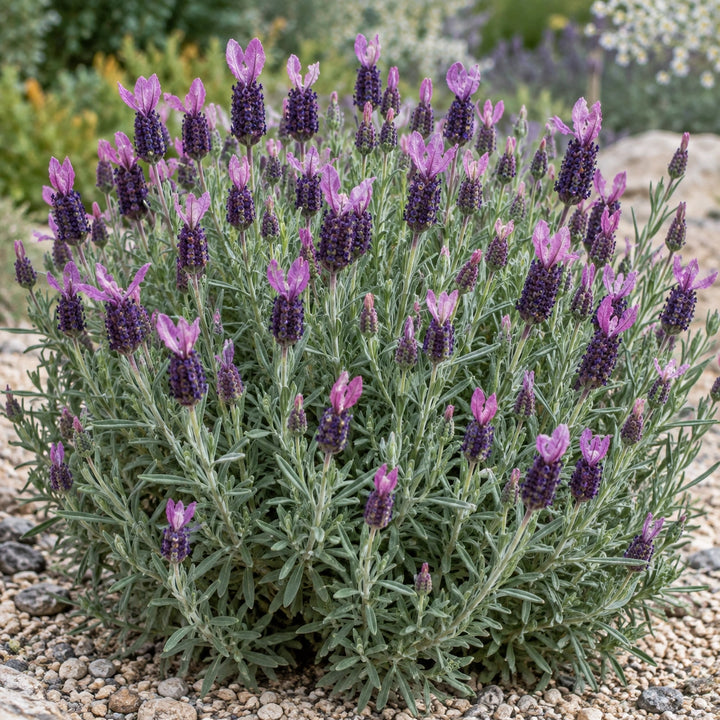
Fathead lavender is named exactly for what it does best: short, plump flower heads that look almost like little pinecones, in shades of dark purple, purple and pink, each topped with upright petals. It grows into a bushy, compact plant about 2 feet tall and wide in a warm climate, with gray-green foliage.
It is a Spanish lavender, so it flowers early, reblooms well and has a bold, resinous fragrance. The name is not a comment on its personality.
Fathead at a glance
| Trait | What to expect |
|---|---|
| Botanical name | Lavandula stoechas 'Fathead' |
| Flowers | Plump heads in dark purple, purple and pink tones |
| Foliage | Gray-green |
| Mature size | About 24 inches tall and 24 inches wide |
| Bloom | Starts early May, peaks late May in warm climates, high rebloom |
| Hardiness | USDA zones 7a to 9b |
| Fragrance | Strong and resinous with camphor and eucalyptus-like notes |
| Wildlife | Great for pollinators; deer resistant |
Why gardeners like the fat heads
English lavender is all about slender spikes. Fathead is about chunky, textured heads that read from across the yard, with a two-tone look as the darker flowers and pinkish petals mix. That shape gives containers and small beds a bold focal point, and it contrasts nicely with fine, wispy plants like ornamental grasses.
Its bloom is early compared with English lavender, so in a warm-climate garden it bridges the gap between spring bulbs and summer perennials.
How to grow it
- Light: full sun, six to eight hours or more.
- Soil: lean and fast-draining. In pots, use a gritty mix in a container with a drainage hole.
- Water: deeply when the top inch or two dries out. Pots need more frequent checks in summer heat.
- Feeding: minimal. Rich soil gives floppy growth and fewer heads.
- Spacing: about 2 feet apart in the ground.
Deadheading for more flowers
Fathead's rebloom is rated high, but it depends on you. Cut each faded head back to the leafy part of the stem, and after the main flush, trim the whole plant lightly into a rounded shape. Stay out of bare wood; Spanish lavender does not always regrow from it.
Winter options
Rated for zones 7a to 9b, Fathead will not usually survive an outdoor Michigan winter. Two easy approaches: enjoy it as a seasonal patio plant, or keep it in a pot and move it to a cool, bright indoor spot before hard frost. Water lightly over winter and bring it back out after the last frost. The Care Calendar keeps the season straight.
Using the flowers
The stems are good for small fresh bouquets, where the fat heads add texture. They are only fair for drying, and Spanish lavender is not recommended for cooking. Enjoy it for color, fragrance in the garden and the steady stream of bees it attracts.
Plant sizes
Fathead is offered as 3-inch plugs, 4-inch pots and 1-gallon pots. See the product page for current sizes and availability.
Frequently asked questions
Is Fathead purple or pink?
Both. The heads are dark purple to purple with pink tones, and the mix shifts as flowers open and age.
Does it need a winter chill to bloom?
No. Unlike English lavender, it flowers without a cold period, which is why it does well as a container and seasonal plant.
Will deer eat it?
Deer usually leave it alone, as with most lavenders.
Keep exploring
Ready to plant it?
Sizes, prices and shipping times are on its page.

















Share how it went in your field