

Use & Care NotesLavender Plants
Fiesta Lavender: A Generous English Lavender for June Color
 Save
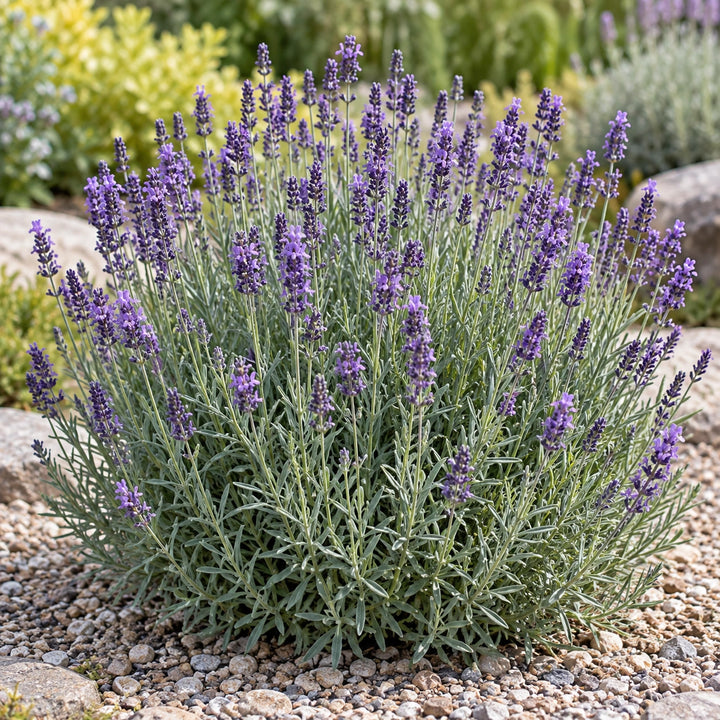
Fiesta lavender is a hardy English lavender with purple spikes over gray-green foliage. It has a compact, bushy habit but spreads generously, reaching about 2 feet tall and up to 3 feet wide, and it throws its party early: bloom starts in early June and peaks by mid-June.
The scent is the sweet, floral, low-camphor kind people associate with English lavender, and it rates well for culinary use.
Fiesta at a glance
| Trait | What to expect |
|---|---|
| Botanical name | Lavandula angustifolia 'Fiesta' |
| Flower color | Purple |
| Foliage | Gray-green |
| Habit | Compact and bushy |
| Mature size | About 24 inches tall and 36 inches wide |
| Bloom | Starts early June, peaks mid-June, moderate rebloom |
| Hardiness | USDA zones 5a to 8b |
| Fragrance | Strong, sweet floral, low camphor |
Planning around an early bloomer
Early English lavenders are the opening act of the lavender season. Fiesta's mid-June peak means it is in full color while later lavandins are still just green mounds. If you want purple from June through August, plant Fiesta alongside a midseason English lavender and a late lavandin, and you will have something in flower for most of the summer. The Bloom Calendar makes the sequence easy to plan.
Because each plant gets about 3 feet wide, Fiesta also works well as a single specimen at a corner or as a low, billowing hedge along a driveway.
Planting and spacing
Give Fiesta at least six to eight hours of sun and soil that drains well after rain. Space plants 30 to 36 inches apart for individual mounds, or about 24 inches if you want them to grow together into a hedge. In heavy soil, raise the bed or plant on a slight mound. Keep the crown at grade and keep mulch and leaf litter off the stems.
Fiesta benefits from a winter chill to set flowers, so it is well matched to cold-winter climates within its zone range.
Care through the year
- Establishment: water deeply when the top few inches of soil are dry for the first season.
- Mature plants: low water needs. Skip fertilizer for compact growth and better flowering.
- Pruning: right after the June bloom, cut stems back and trim the mound by about a third, staying in green growth. A light shape in spring is optional. See the Pruning Calendar.
- Winter: drainage first. Wet, cold soil is far more dangerous than cold alone.
Harvest ideas
Cut stems for drying when the buds are colored and just a few flowers have opened, usually in early to mid-June for Fiesta. Hang small bunches in a dark, airy spot. For the kitchen, use food-grown buds and start with a small amount; English lavender is sweet but strong. Fresh stems make a pleasant early-summer bouquet alongside roses or peonies.
Plant sizes
Fiesta is offered as 3-inch plugs, 4-inch pots and 1-gallon pots. See the product page for current sizes and availability.
Frequently asked questions
How big does Fiesta get?
About 24 inches tall and up to 36 inches wide at maturity. Size varies with soil and climate.
Can I grow Fiesta in a container?
Young plants do fine in a large pot with fast drainage, but its eventual width makes it happiest in the ground.
Is Fiesta a good culinary lavender?
Yes. Its culinary rating is great, like most English lavenders.
Keep exploring
Ready to plant it?
Sizes, prices and shipping times are on its page.

















Share how it went in your field