

Use & Care NotesLavender Plants
Fiona English Lavender: Silver Leaves and Early Purple Spikes
 Save
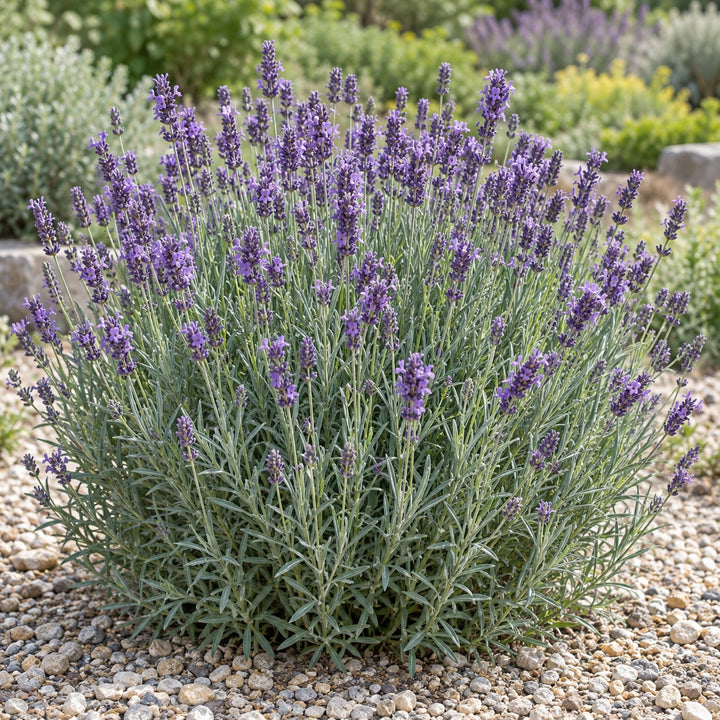
Fiona English lavender combines two things gardeners love about Lavandula angustifolia: silver foliage that looks good all year and early purple spikes with a sweet, floral scent. It grows into a bushy, compact plant about 2 feet tall that spreads up to 3 feet wide, and it is at its best in mid-June.
It is a natural fit for herb and kitchen gardens, where it can sit beside thyme, sage and rosemary and be harvested for both the vase and the mixing bowl.
Fiona at a glance
| Trait | What to expect |
|---|---|
| Botanical name | Lavandula angustifolia 'Fiona' |
| Flower color | Purple |
| Foliage | Silver |
| Mature size | About 24 inches tall and 36 inches wide |
| Bloom | Starts early June, peaks mid-June, moderate rebloom |
| Hardiness | USDA zones 5a to 8b |
| Culinary | Rated great |
| Fragrance | Strong, sweet floral, low camphor |
A lavender for the herb garden
Mediterranean herbs share lavender's tastes: sun, sharp drainage and not too much water or fertilizer. Fiona's silver leaves tie an herb bed together visually, especially next to green thyme or purple sage. Put it where you walk past often; brushing the foliage releases the scent even when the plant is not in flower.
Because English lavender has the lowest camphor and the sweetest flavor of the common lavender types, Fiona is a sensible choice if baking or infusing is part of the plan.
Planting Fiona
- Sun: full sun, ideally all day.
- Soil: sandy or loamy and fast-draining. Improve clay with grit or plant in a raised bed.
- Spacing: 30 to 36 inches for separate mounds, closer for a hedge.
- Depth: crown level with the soil. Keep mulch and compost off the base.
Fiona benefits from a winter chill to bloom well, which suits gardens with real winters. Check your zone with the USDA Zone Finder.
Harvesting for the kitchen
For culinary buds, cut stems on a dry morning when the buds are fully colored and only a few flowers have opened. Hang small bunches upside down somewhere shaded and airy for a week or two, then rub the buds off and store them in a sealed jar away from light. Only use buds from plants grown and handled as food. Start with a small pinch in a recipe; lavender gets bitter and perfumey when overdone.
The Harvest Calendar shows when English lavenders like Fiona are usually ready to cut.
After the harvest
Once the main flush is cut, trim the whole plant back by about a third, staying in leafy growth. This keeps the silver mound dense and often brings a moderate second bloom. Stop pruning by late summer so new growth can toughen before winter. The Pruning Calendar lays out the timing.
Plant sizes
Choose from 3-inch plugs, 4-inch pots and 1-gallon pots. See the product page for current sizes and availability.
Frequently asked questions
How does Fiona differ from other early English lavenders?
Its silver foliage is the standout. Many English lavenders are gray-green; Fiona leans brighter and more silvery.
Is it deer resistant?
Yes. Deer generally avoid lavender, and Fiona is rated deer resistant.
Can I harvest it more than once?
The main harvest comes in June. A lighter rebloom may follow after trimming, which you can cut for small bundles.
Keep exploring
Ready to plant it?
Sizes, prices and shipping times are on its page.

















Share how it went in your field