

Use & Care NotesLavender Plants
Folgate Lavender: The Blue-Toned English Lavender for the Kitchen
 Save
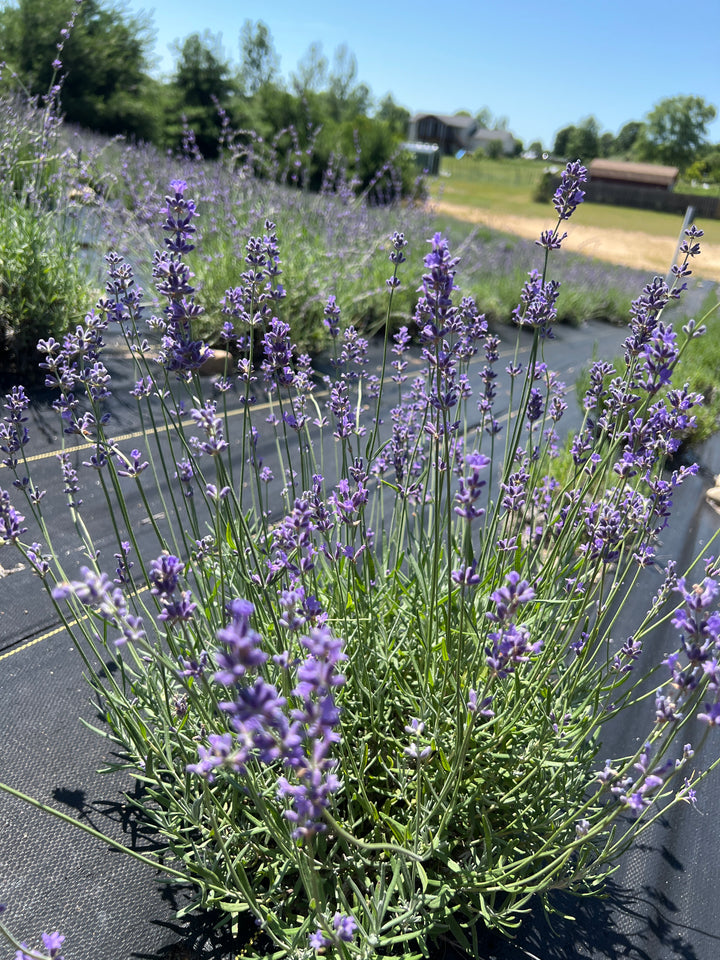
Folgate lavender is an English lavender with mid-purple flowers that carry a noticeable blue cast, set over silver-gray foliage. It is strongly fragrant, sweet rather than sharp, and it is one of the cultivars people reach for when they want lavender that tastes as good as it smells.
Botanically it is Lavandula angustifolia 'Folgate', sometimes sold as 'Folgate Blue'. Like other English lavenders it is among the hardier lavenders for cold winters, which makes it a sensible choice for Great Lakes gardens that see real snow.
Folgate lavender at a glance
| Trait | What to expect |
|---|---|
| Botanical name | Lavandula angustifolia 'Folgate' |
| Flower color | Mid-purple with a blue cast |
| Foliage | Silver-gray, evergreen mound |
| Bloom | Begins mid to late June, peaks late June to mid-July, with moderate rebloom |
| Hardiness | USDA zones 5a to 9b |
| Fragrance | Strong and sweet |
| Best uses | Culinary, fragrance, bundles, borders |
Why growers choose Folgate
English lavenders are generally the sweetest-tasting lavenders, and Folgate is rated excellent for culinary use. That makes it a strong pick for anyone who bakes with lavender, makes lavender sugar or simply wants a few rows that can go straight from the garden to the kitchen. It has also earned the Royal Horticultural Society's Award of Garden Merit, a nice signal that it performs reliably in gardens.
Its blue tone is useful in design too. Planted beside deeper purple cultivars, it adds a cooler note; beside pink or white lavenders, it reads as the classic lavender color.
Planting and spacing
Give Folgate at least six to eight hours of direct sun and soil that drains quickly after a summer storm or a spring thaw. Sandy or loamy soil is ideal. Heavy clay needs real improvement or a raised bed, because wet roots, not cold, are what usually end a lavender's life.
Mature size varies with climate and soil, so check the listing for the current size and space plants at about their mature width so air can move between them. Set the crown level with the soil surface, water the root zone thoroughly and keep mulch, wet leaves and compost away from the woody base.
Not sure about your climate? The USDA Zone Finder and the Frost Date Estimator will help you plan the timing.
Care through the year
- First season: water deeply when the top few inches of soil are dry. Small plugs need more frequent checks than gallon plants.
- Once established: Folgate has low water needs. Overwatering is the most common mistake.
- Feeding: go light. Rich soil and extra nitrogen make floppy growth and fewer flowers.
- Pruning: after the main bloom, trim spent stems and shape the mound, staying in the leafy growth. Do not cut hard into bare old wood. The Pruning Calendar lays out the timing.
- Winter: drainage matters more than covering. Avoid heavy wet mulch over the crown.
Harvesting for the kitchen and for bundles
For culinary buds, cut on a dry morning once the dew is gone, when the buds are fully colored and only a few flowers have opened. Hang small bundles upside down in a shaded, airy spot, then rub the dry buds off the stems. Use only plants grown and handled as a food crop, and start with a small amount; lavender is strong, and a little goes a long way.
For dried bundles, the same timing keeps the color and shape. Folgate's 12-inch stems are a comfortable length for small bouquets and sachets.
Choosing a plant format
Folgate is offered as individual plants and plugs (3-inch plugs, 4-inch pots and 1-gallon pots) and as full plug trays for growers, including 72-cell trays and deep 20-cell trays. Individual plants suit home gardens, while trays are made for growers planting rows or potting up their own stock. See the product pages for current sizes and availability, or visit the Wholesale Hub for tray orders.
Frequently asked questions
Is Folgate lavender good for cooking?
Yes. It is an English lavender with an excellent culinary rating and a sweet flavor. Use food-intended buds and start with small amounts.
How is Folgate different from Hidcote or Munstead?
All three are English lavenders. Folgate is known for its blue-toned flowers and strong sweet scent. The Compare tool lines up size, bloom time and color side by side.
Will Folgate survive a Michigan winter?
English lavenders are among the hardiest lavenders, and Folgate is rated for zones 5a to 9b. Sharp drainage is the deciding factor in cold, wet winters.
Keep exploring
Ready to plant it?
Sizes, prices and shipping times are on its page.

















Share how it went in your field