

Product Field NotesHerb Plants
Greek Oregano: The Bold Cooking Oregano for a Sunny Herb Bed
 Save
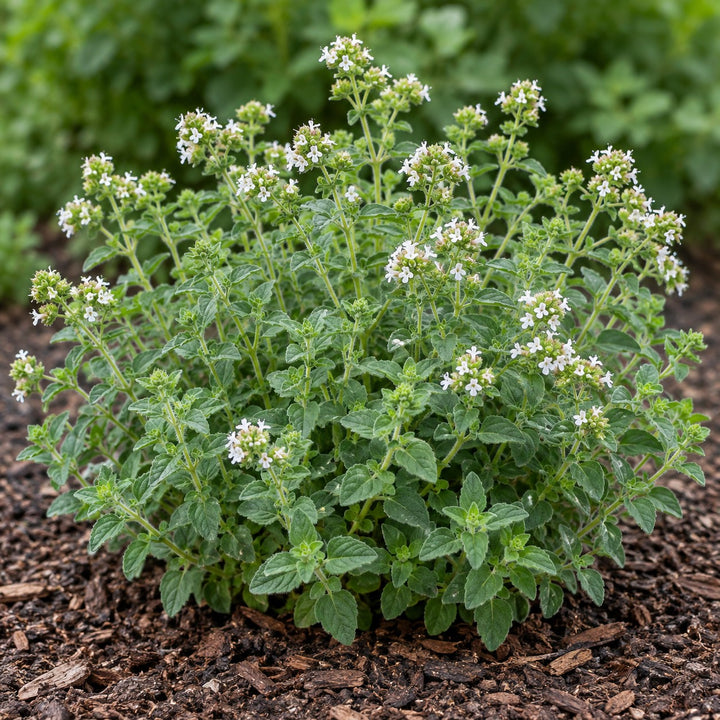
Greek oregano is the oregano you want in the kitchen. Its dark green, slightly hairy leaves are highly aromatic, with the sharp, pungent flavor that defines tomato sauce and pizza night. From midsummer, clusters of tiny white flowers open at the stem tips and pull in a remarkable number of pollinators.
It is compact, bushy and tough, and it likes the same sunny, dry life as lavender.
Greek oregano at a glance
| Trait | What to expect |
|---|---|
| Botanical name | Origanum vulgare subsp. hirtum |
| Leaves | Dark green, hairy, rounded to oval and highly aromatic |
| Flowers | White, tiny, in clusters at the stem tips |
| Size | 12 to 24 inches tall and wide |
| Bloom | Starts early July, peaks late July, into fall |
| Hardiness | USDA zones 5a to 8b |
| Water | Low |
| Wildlife | Excellent for pollinators; deer resistant |
A natural neighbor for lavender
Greek oregano is heat and drought tolerant and does its best in dry, sunny sites, the same conditions that keep lavender healthy. Grow them side by side in a Mediterranean-style herb bed with thyme and sage, and you can water the whole bed on the same light schedule.
The look works, too. Oregano's low, rounded clump of dark green sits comfortably in front of lavender's taller silver mounds, and its white flowers in July brighten the purple of the lavender bloom. Bees move happily from one to the other. Sketch the bed in the Companion Plant Planner.
Planting and care
- Soil: well drained. Fungal problems and root rot show up in wet, poorly drained soil.
- Water: regularly while it establishes, then sparingly.
- Feeding: skip it. Lean soil concentrates the flavor.
- Trimming: cut stems back after flowering, or harvest heavily before bloom, to keep the plant compact.
- Winter: it is a woody-based perennial that winters outdoors in zone 5-6 in well-drained soil. Zone 5 is the cold edge of its range, so drainage really matters.
Harvesting and drying
Leaf flavor peaks just before the plant flowers. Cut stems a few inches above the base on a dry morning, then use them fresh or hang small bunches to dry in a shaded, airy spot. Dried Greek oregano keeps its punch well, which is one reason it is the standard culinary oregano. Crumble it into tomato sauces, over roasted vegetables, into marinades for meat and poultry, or onto a Greek salad.
If you leave some stems to flower, you get a long-lasting pollinator magnet from midsummer into fall.
Sizes offered
Greek oregano comes as 3-inch plugs, 4-inch pots and 1-gallon pots. It also grows well in containers. See the product page for current sizes and availability.
Frequently asked questions
How is Greek oregano different from common oregano?
Greek oregano has white flowers and a much stronger, sharper flavor. Ornamental oreganos with pink flowers are often milder.
Will it survive a Michigan winter?
It is rated for zones 5a to 8b. In zone 5, plant it in sharply drained soil and avoid wet mulch over the crown.

































Share how it went in your field