

Product Field NotesLavender Plants
Hidcote Superior Lavender: Low, Wide and Deep Purple
 Save
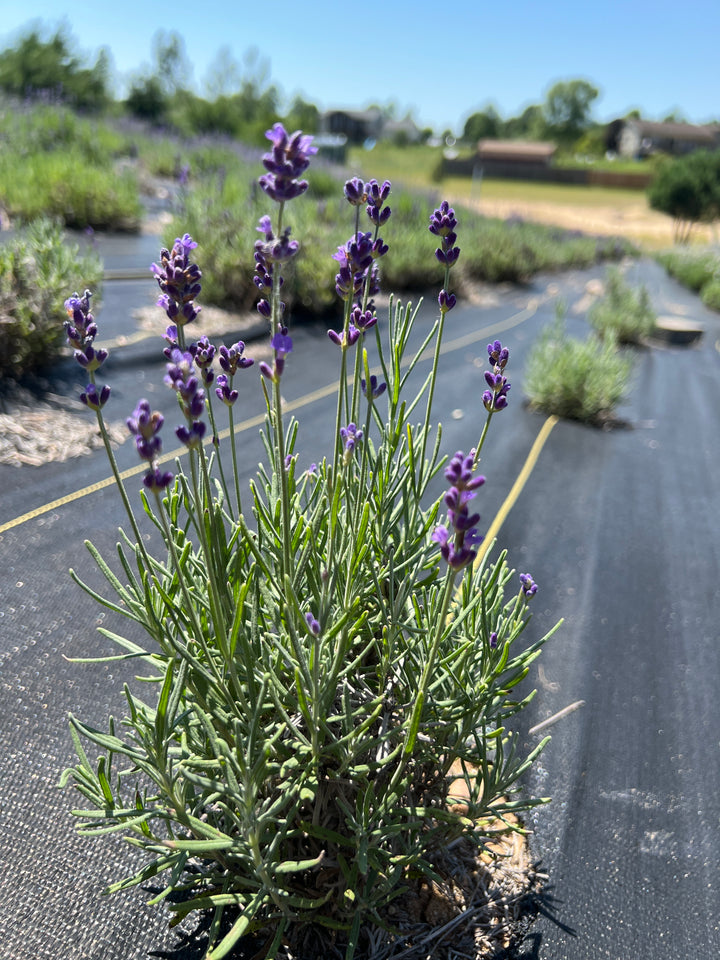
Hidcote Superior lavender is an English lavender that grows out more than up. It forms a bushy evergreen shrub about 20 inches tall that can spread to roughly 39 inches wide, with aromatic, pale silvery-green foliage and fragrant deep purple flowers from mid-June to a mid-July peak.
That low, wide shape makes it unusually good at covering ground, softening the edge of a wall or spilling over a raised bed.
Hidcote Superior at a glance
| Trait | What to expect |
|---|---|
| Botanical name | Lavandula angustifolia 'Hidcote Superior' |
| Flower color | Deep purple |
| Foliage | Pale silvery-green, aromatic, evergreen |
| Mature size | About 19.7 inches tall and 39.4 inches wide |
| Bloom | Starts mid-June, peaks mid-July, moderate rebloom |
| Hardiness | USDA zones 5a to 9b; RHS H5 |
| Fragrance | Moderate; fragrant flowers and foliage |
| Wildlife | Great for pollinators; deer resistant |
Where a low, wide lavender works
Most lavenders are round or upright. Hidcote Superior's spreading habit fills different jobs:
- Slopes and banks: a sunny, well-drained slope is ideal lavender ground, and wide plants cover it with fewer holes.
- Wall tops and raised beds: let it spill over the edge for a soft, draped look.
- Front of the border: it stays low enough not to hide plants behind it.
- Along paths: deep purple flowers against pale foliage show well at walking height.
Planting
Full sun and fast drainage come first. Space plants about 36 inches apart for separate mounds, or a bit closer to knit them into a low mass. On clay, raise the planting area or plant on a slope. Set the crown at soil level and keep wood mulch and compost away from the stems; gravel mulch suits silvery foliage well. Water deeply through the first season, then sparingly.
It benefits from a winter chill to flower and carries the RHS H5 hardiness rating. For planting dates, see the Frost Date Estimator.
Pruning a spreading plant
Wide lavenders can open up in the center if left alone. After the main bloom, cut the flower stems and shear the plant lightly all over, following its low dome shape and staying in green growth. A moderate rebloom may follow. Stop trimming by late summer, and tidy winter tips in spring. The Pruning Calendar lays out when.
Harvest and uses
Hidcote Superior's best listed use is for oil, and it rates good for cut and dried flowers. Deep purple stems make rich-colored sachets and small bundles; cut as the first flowers open and dry in a dark, airy spot. As an English lavender it rates great for culinary use; harvest buds from food-grown plants and use them sparingly.
Plant sizes
Offered as 3-inch plugs, 4-inch pots and 1-gallon pots. See the product page for current sizes and availability.
Frequently asked questions
How is Hidcote Superior different from Hidcote?
Both are English lavenders with dark flowers. Hidcote is a compact, rounded mound about 18 inches tall and 2 feet wide; Hidcote Superior is listed lower and much wider, with paler silvery-green foliage.
Can it be used as a groundcover?
On a sunny, well-drained slope or bed, its wide habit covers ground well. It is still a shrub, so plan spacing rather than expecting it to run.
Is it fragrant?
Its fragrance is rated moderate, and both flowers and foliage are aromatic.

































Share how it went in your field