

Product Field NotesLavender Plants
Impress Purple Lavender: A Big Lavandin with Long Stems for Rows
 Save
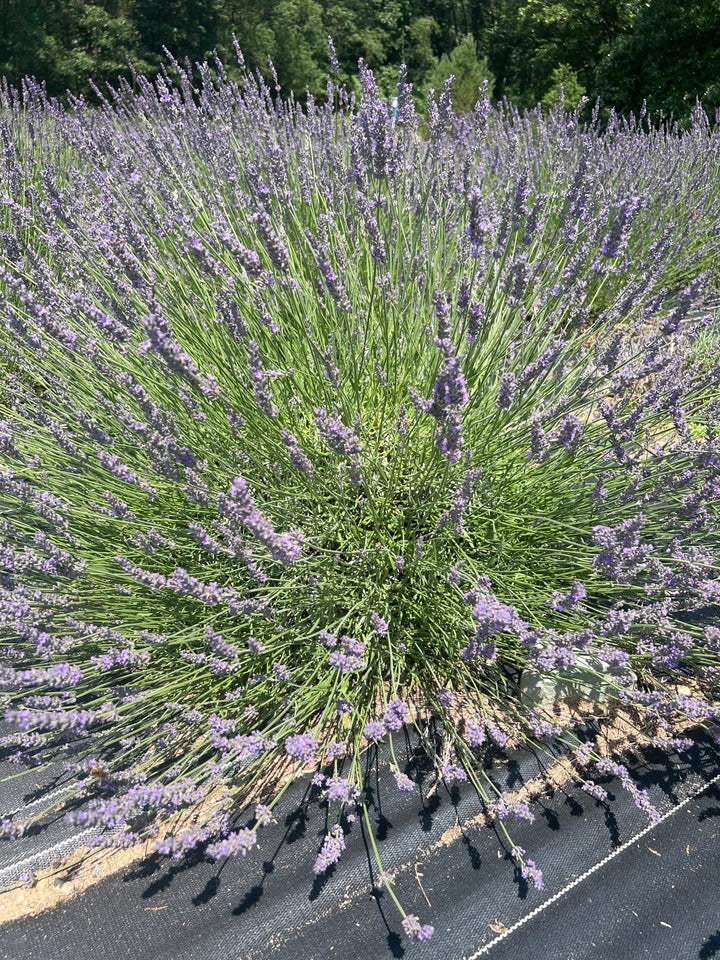
Impress Purple lavender is a lavandin, the vigorous hybrid group that gives you bigger plants and longer stems than English lavender. It grows upright to about 30 inches tall and 36 inches wide, with purple spikes on stems around 17 inches long over gray-green foliage.
Its botanical name is Lavandula × intermedia 'Impress Purple', a cross of English lavender and spike lavender. Unlike many lavandins, its scent is described as sweet and mild rather than sharp. It is rated for USDA zones 5a to 9b, which covers most of the Great Lakes region.
Impress Purple at a glance
| Trait | What to expect |
|---|---|
| Botanical name | Lavandula × intermedia 'Impress Purple' |
| Flower color | Purple |
| Foliage | Gray-green, upright |
| Size | About 30 inches tall and 36 inches wide |
| Stem length | About 17 inches |
| Bloom | Mid-July, single main flush |
| Hardiness | USDA zones 5a to 9b |
| Fragrance | Mild and sweet for a lavandin |
| Ratings | Excellent for oil, cut flowers, dried flowers, pollinators and field rows |
A workhorse for growers and big gardens
Lavandins are the lavenders most often seen in large production fields, and Impress Purple is rated excellent for commercial field use and high oil production. Long, straight stems make clean bundles, and the plant's size means fewer plants fill more ground. If you are planning rows for bundles, oil or a pick-your-own patch, it belongs on the shortlist.
In a home landscape it works as a bold backdrop. A line of Impress Purple behind shorter English lavenders creates a two-level wave of purple, and its single July flush lands just as many English lavenders are finishing their first round.
Planting and spacing
Full sun and quick drainage are non-negotiable. In heavy soil, plant on raised rows or mounds so water runs away from the crown. Give each plant about 36 inches, or roughly 3 feet between plants and 4 to 5 feet between rows if you want to walk and harvest comfortably. Crowded lavandins trap humidity, and humidity invites disease.
Water deeply after planting and as needed through the first summer. After that, water needs are low.
Care and pruning
- Feeding: keep it lean. Extra nitrogen makes floppy stems.
- Harvest cut: cutting stems for bundles doubles as the main prune.
- Shaping: after harvest, trim the mound into a rounded shape, leaving green growth on every stem. Old bare wood rarely resprouts.
- Winter: lavandins need winter cold to flower well. Drainage and airflow keep them healthy through wet thaws.
See the Pruning Calendar for timing.
Harvest and uses
For dried bundles, cut when the first few flowers on each spike have opened. For oil, growers typically wait until bloom is further along. Lavandin is stronger and more camphor-forward than English lavender, so while its culinary rating is good, most cooks use it sparingly or reach for an English variety for baking. Its mild, sweet character makes it a pleasant choice for sachets and home fragrance.
Plants, plugs and trays
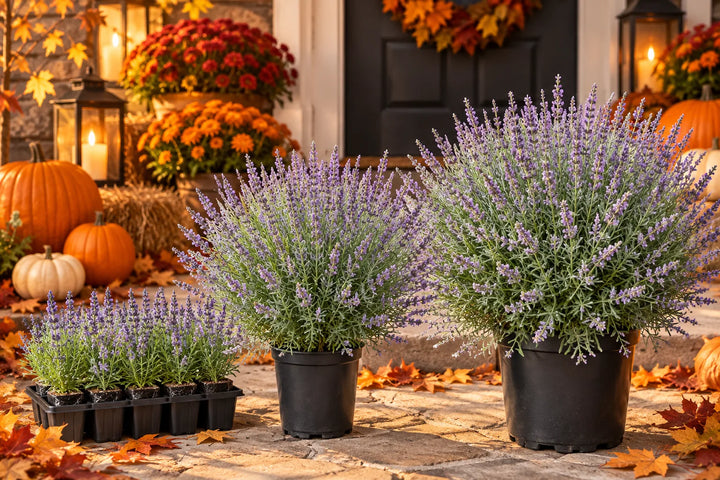
Impress Purple is offered as individual plants (3-inch plugs, 4-inch pots, 1-gallon pots) and as 72-cell and 20-cell plug trays. Trays are made for growers planting rows; pots suit gardens. See the product pages for current availability, and visit the Wholesale Hub for tray orders.
Frequently asked questions
What makes it different from English lavender?
As a lavandin, it is larger, longer-stemmed and higher in oil, with a single main bloom. English lavenders are smaller and sweeter for cooking.
Is it hardy in Michigan?
It is rated for zones 5a to 9b. Good drainage matters more than cold in Michigan winters.
Does it rebloom?
Rebloom is low. Expect one generous flush in mid-July.

































Share how it went in your field