

Use & Care NotesLavender Plants
Jennifer Lavender: A Low Mound That Sends Up Long Violet Wands
 Save
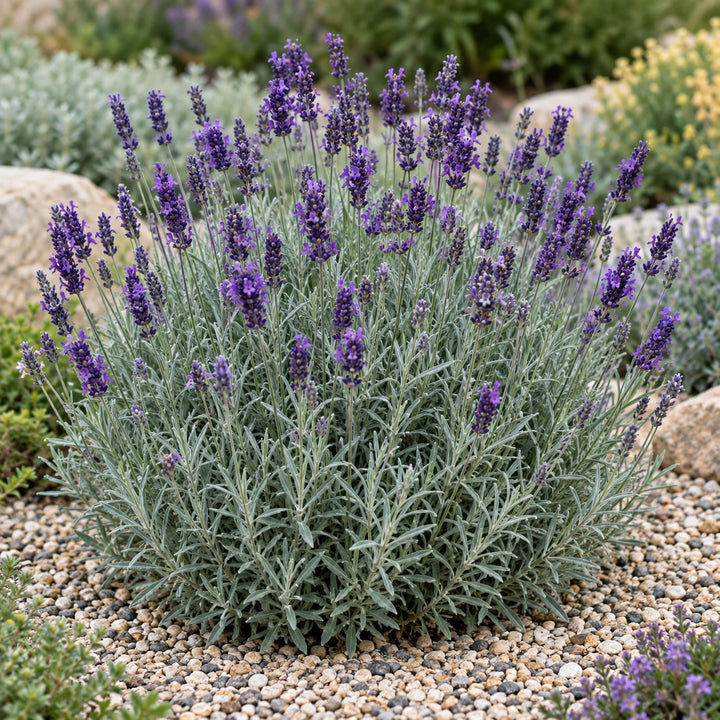
Jennifer lavender has an unusual shape. The foliage forms a low, compact mound only about 7 inches tall and up to 20 inches wide, and from it rise long flower stems, around 21 inches, tipped with violet spikes. The result is a carpet of gray-green leaves with wands of color floating well above it.
Botanically it is Lavandula × chaytoriae 'Jennifer', a hybrid of English lavender and woolly lavender introduced in 2001. It is rated for USDA zones 6a to 9b, and its fragrance is described as sweet lavender with a pine-like undertone.
Jennifer at a glance
| Trait | What to expect |
|---|---|
| Botanical name | Lavandula × chaytoriae 'Jennifer' |
| Parentage | English lavender × woolly lavender |
| Flower color | Violet, on spikes about 2 inches long |
| Foliage | Gray-green, compact mound |
| Size | Foliage about 7 inches tall and 20 inches wide; stems about 21 inches |
| Bloom | Starts mid-July, peaks early August, single flush |
| Hardiness | USDA zones 6a to 9b |
| Fragrance | Moderate; sweet lavender with a pine-like undertone |
A lavender for the cutting garden
Long stems are what florists want, and Jennifer's cut flower rating is excellent. Its 21-inch wands are long enough for real vase arrangements, not just posies, and they add a loose, airy line to mixed bouquets. Cut in the morning when the first flowers on each spike are open and put the stems straight into water.
It dries well too, rated good, and the long stems make elegant bundles. It is not recommended for culinary use, so keep it for vases, wreaths and fragrance.
Where it fits in the garden
The low mound makes Jennifer a nice choice for the front of a bed or the top of a sunny wall, where the stems can arch outward. In bloom, the wands sway above the foliage and catch the breeze. Late timing helps too: it peaks in early August, after many English lavenders have finished their main show, so it extends the lavender season.
Plan the bed in the Cut Flower Planner if you are growing for bouquets.
Planting and care
- Sun: full sun.
- Drainage: excellent drainage is essential. Woolly lavender in its parentage means it dislikes wet, humid conditions around the foliage.
- Spacing: allow about 20 inches for the mound, plus room for the stems to lean.
- Water: regular water the first season, then low water needs.
- Mulch: use gravel rather than bark or compost under the low foliage so it stays dry.
- Pruning: after harvest, cut stems back to the foliage and lightly tidy the mound.
Winter
Rated to zone 6a, Jennifer suits much of the southern Great Lakes, provided drainage is sharp and the crown stays out of standing water. In borderline spots, a raised bed and a sheltered, sunny site help most. Check your zone with the USDA Zone Finder.
Plant formats
Jennifer is offered as a 3-inch plug, 4-inch pot and 1-gallon pot. See the product page for current sizes and availability.
Frequently asked questions
Why are the stems so much taller than the plant?
That is its habit: a low foliage mound with long flowering stems. It is what makes Jennifer such a good cut flower.
Does it rebloom?
No. It flowers in a single flush from mid-July into August.
What is Lavandula x chaytoriae?
It is a hybrid group of English lavender and woolly lavender. The botanical groups page explains more.
















Share how it went in your field